Grok 4.6 Isn't an Image Generator: What the 61 Score Means for AI Image Users
Grok 4.6 is not a new image generator. It is a frontier reasoning model that can look at images and return text, and the "visual and interactive work" in its launch announcement is about planning and building visual projects, not about producing better pixels. If you use AI for images, the release changes the thinking layer around your work, not the image-output layer. This article separates what shipped, what the 61 score measures, and what you should actually verify before your next generation.
Key takeaways
- Grok 4.6 is a reasoning model: text and image inputs, text output, function calling, and structured outputs. Image generation is a separate Grok product family, not a Grok 4.6 capability at launch.
- "Visual and interactive work" means app and interface building: the vendor says first passes on such projects are stronger than Grok 4.5's. That is a company observation, not an independent guarantee.
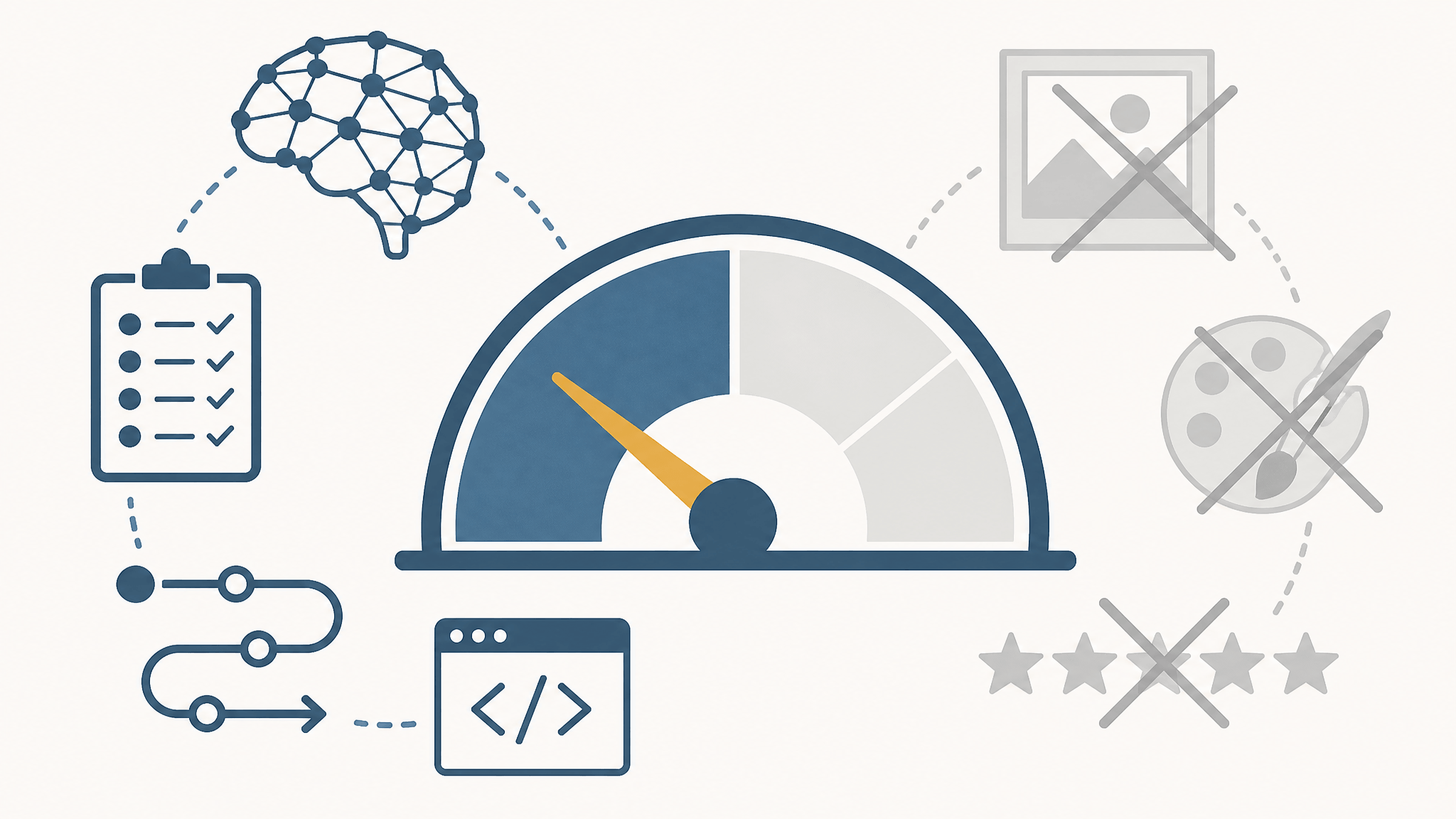
- The 61 is an agentic-knowledge-work score: it is a composite index, not an image-quality benchmark. It tells you how the model reasons and works across long tasks.
- What changed for you is verification: check which model actually powers the image tool you pay for, check its live cost disclosure, and only adopt Grok 4.6 for planning or pipeline reasoning if the cost math works.
What is Grok 4.6, in one paragraph
SpaceXAI (formerly xAI) released Grok 4.6 on August 12, 2026, jointly announced with Cursor, with availability through the xAI API, Grok Build, Cursor, OpenRouter, Vercel, and Cloudflare. The model accepts text and JPEG/PNG image inputs and returns text, supports function calling and structured outputs, and keeps a 500,000-token context window. API pricing starts at $2 per million input tokens and $6 per million output tokens, with cached input at $0.50 per million; rates double when a prompt reaches 200,000 input tokens, and a faster variant costs twice the standard rates.
That profile matters for image users because it tells you what Grok 4.6 can and cannot do. It can read and reason about an image you attach. It cannot generate one through this model's API at launch.
What "visual and interactive work" means in the announcement
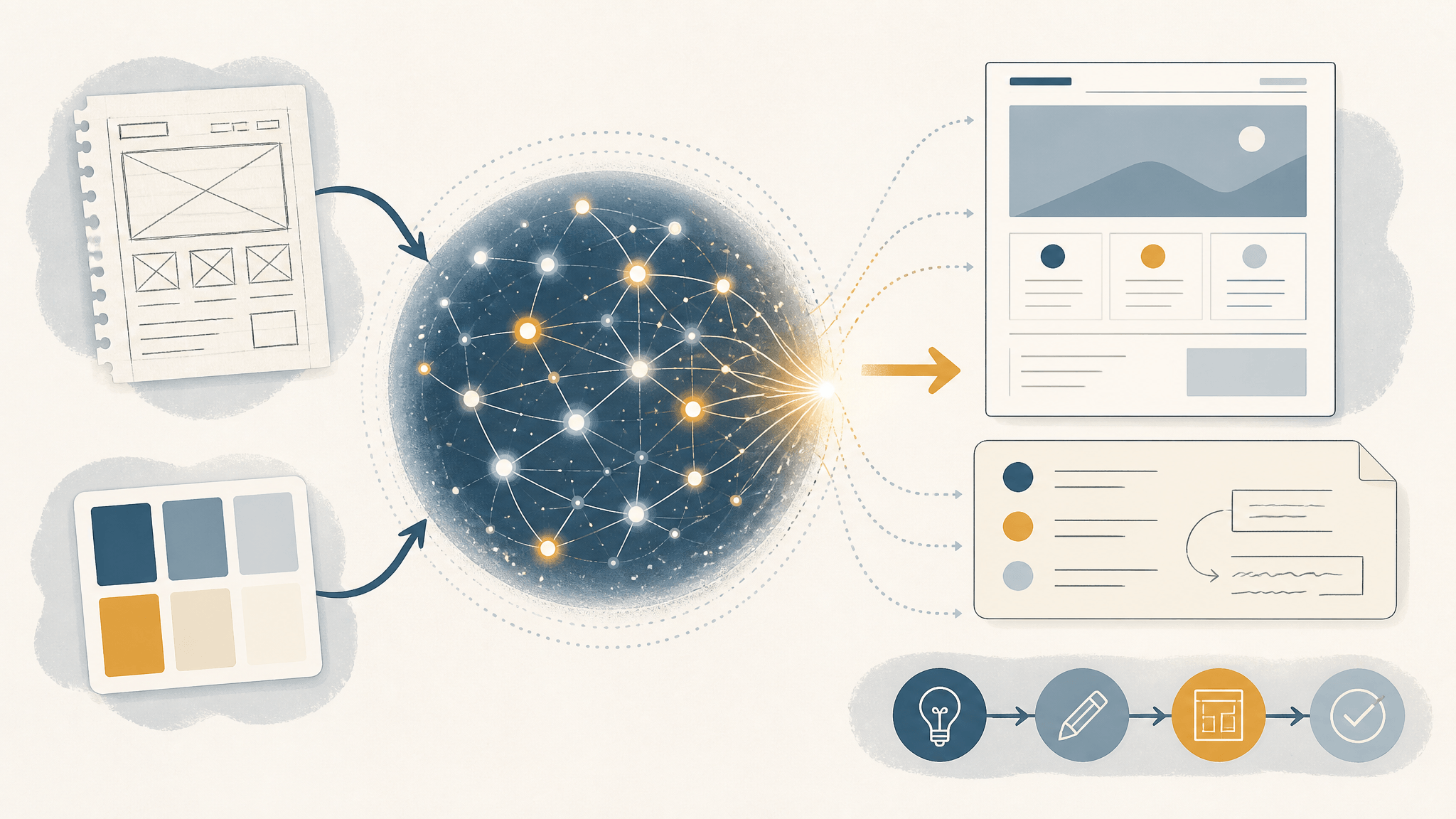
The official framing is specific: Grok 4.6 "builds on Grok 4.5 with a particular focus on long-running agents and more ambitious interactive and visual work." In practice, SpaceXAI describes turning a product idea into an application's structure and visual language, implementing core interactions, and refining the result through multiple feedback cycles, with stronger first passes than Grok 4.5.
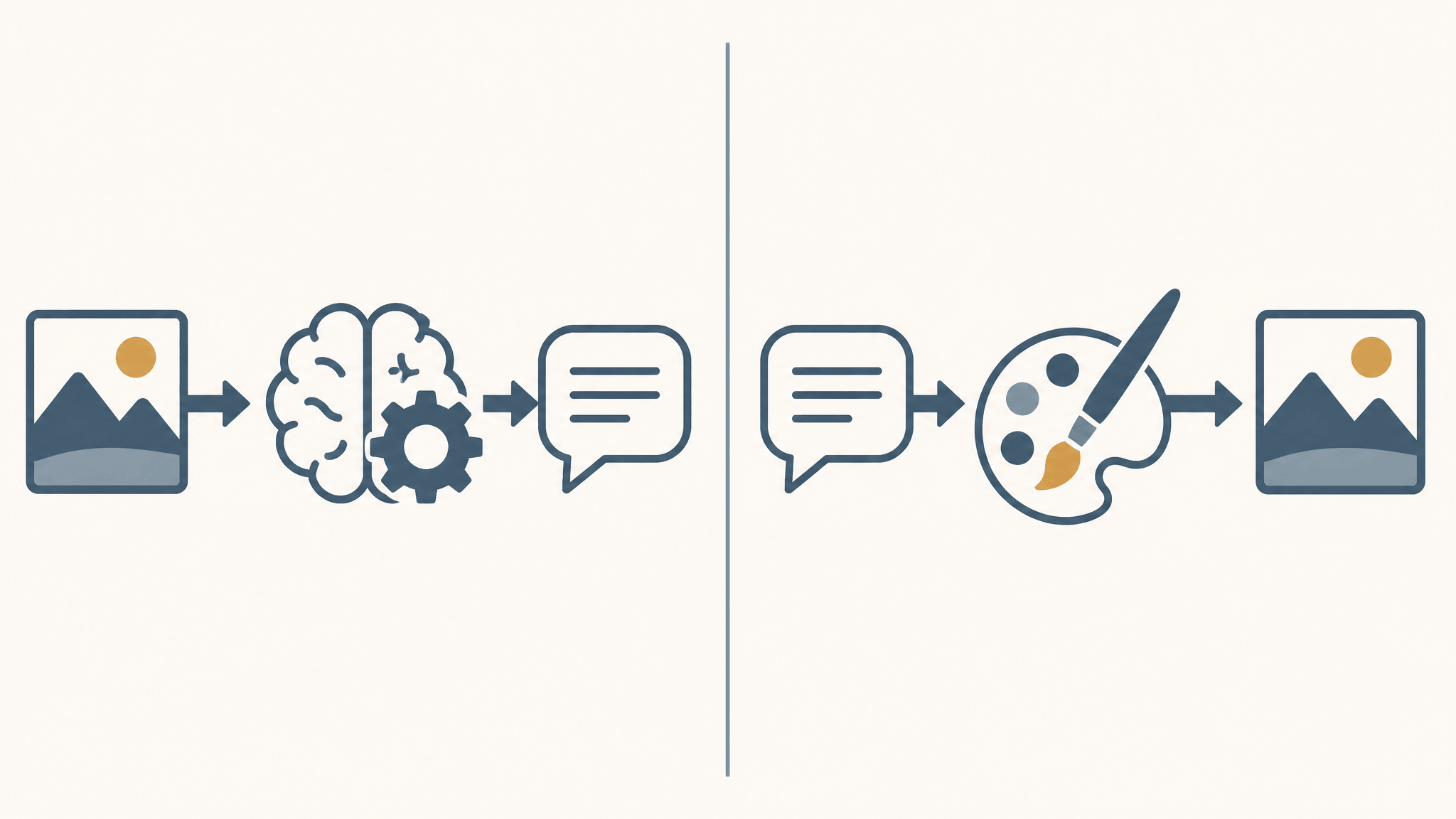
Read that as design-and-build work: generating interface layouts, establishing visual direction, iterating on interactions. It is not the same thing as "Grok can now make images." The official models documentation is explicit that image, audio, and video capabilities live in dedicated models and APIs, and that Grok 4.6 is the model for everything else. If you use Grok's consumer image tools, you are using a separate image-generation product, not the Grok 4.6 reasoning model.
One caveat before you plan a workflow around this: the "stronger first passes" claim is a vendor observation from launch materials. It has not been independently measured as an image-design capability, and the consumer Grok apps were not the launch surface for this release.
What the 61 score does and doesn't measure
The 61 comes from the Artificial Analysis Intelligence Index (AAII), a composite of nine evaluations built around reasoning, agentic knowledge work, and tool use. Artificial Analysis measured Grok 4.6 (high reasoning effort) at 61, five points above Grok 4.5, tied with GPT-5.6 Sol at maximum effort, and behind Claude Opus 5 (63) and Claude Fable 5 (62).
The interesting results are on agentic work: Grok 4.6 posted an Elo of 1753 on GDPval-AA v2, 50.7% on τ³-Banking, and 88.4% on Terminal-Bench v2.1. It also completed long-horizon AA-Briefcase tasks in roughly 53 turns and 0.5 billion input tokens on average, versus about 103 turns and 2.0 billion tokens for Claude Opus 5. Artificial Analysis measured about $0.84 per Intelligence Index task, up from $0.36 for Grok 4.5 — meaning part of the intelligence gain came from more verbose outputs.
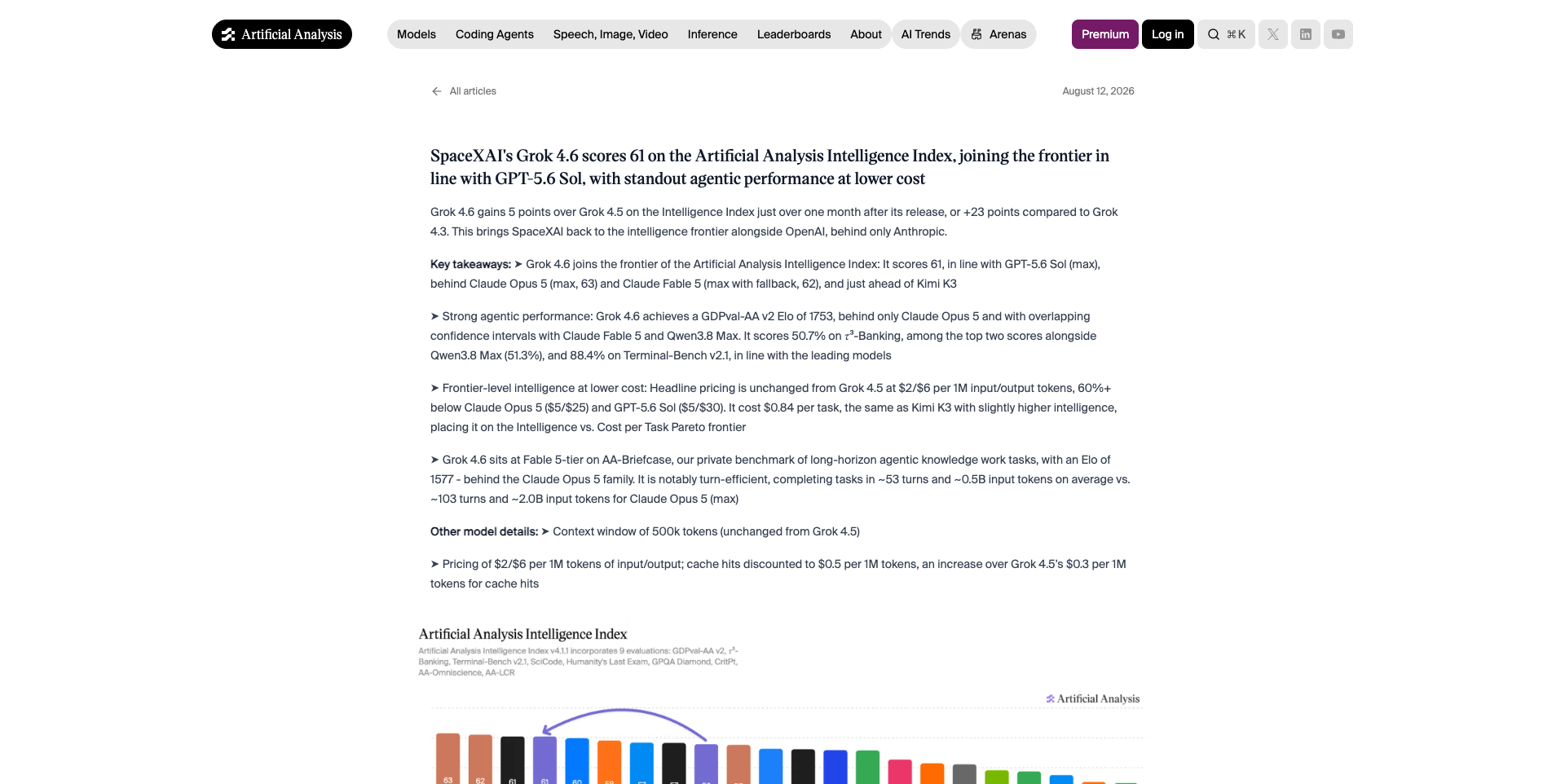
Source: Artificial Analysis — Grok 4.6 benchmarks and analysis (accessed August 13, 2026)
Here is what the score is not: it is not an image-quality score, not an aesthetic ranking, and not evidence that one model "makes better images." The launch comparison table itself is mixed — Grok 4.6 leads on some rows while rivals lead on others, and the vendor notes the third-party figures use the best self-reported or publicly available results. For someone who makes images, the 61 is most useful as context for the reasoning and planning layer, not as a reason to switch image tools.
What actually changes for AI image users
1. Do not switch image tools because of a reasoning-model launch
A frontier reasoning model is not the same as a new image generator. If the tool you use has not changed its underlying model, the release changes nothing about your outputs. Check the tool's own documentation and model labels before assuming anything.
2. If you use Grok image tools, check which product you are on
Grok's image generation and Grok 4.6 are different things. The SERP confusion around "Grok 4.6 image generation" is real, and so is the difference: 4.6 reads images and reasons about them; the Imagine-style image tools generate them. Confirm which surface you are actually paying for.
3. Use Grok 4.6 for the thinking around images
Where a stronger reasoning model can help image work is upstream: drafting prompts and briefs, planning a batch, organizing assets, researching styles, or structuring an editing workflow. Those are text-and-reasoning tasks, which is what the AAII measures. Treat the help as workflow support, not a promise about output quality.
4. If you build pipelines, compute cost per task, not per token
The headline $2/$6 rate looks cheap, but long-context requests double in price at 200,000 input tokens, and Artificial Analysis measured $0.84 per task on its index — more than double Grok 4.5's $0.36. For automated image workflows that send images, prompts, and history back and forth, the relevant number is total cost per completed run.
5. Verify the model and live cost of the image tool you pay for
This is the habit the release makes more relevant: know which model actually powers the tool, what it costs per run at the current moment, and where the result is stored. SketchTo's tool pages show the actual model and the live credit cost before generation, and owned results stay recoverable in private History — a concrete example of that practice. SketchTo does not currently integrate Grok 4.6, so treat the release as context, not as a new SketchTo feature.
6. Watch the official docs and the model card
Availability, pricing, and reasoning options can change quickly after a launch. The official SpaceXAI docs and the announcement are the sources to check before you commit a workflow or budget to Grok 4.6.
Bottom line
For people who use AI to make images, Grok 4.6 changes the reasoning and planning layer, not the image-output layer. It can analyze an image, help you structure a visual project, and reason across long tasks at a competitive price — but it is not an image generator, and its 61 score measures agentic knowledge work, not picture quality. Keep the verification habits: check which model powers your tool, check the live cost before generating, and treat benchmark headlines as context rather than as instructions to switch.
Transform Your Images with AI
Turn sketches into stunning images, remove backgrounds, swap faces, and more — all powered by AI.
Try Sketch To FreeShare
SketchTo Team
Tech writer covering AI tools, image processing, and creative workflows.
Related Articles
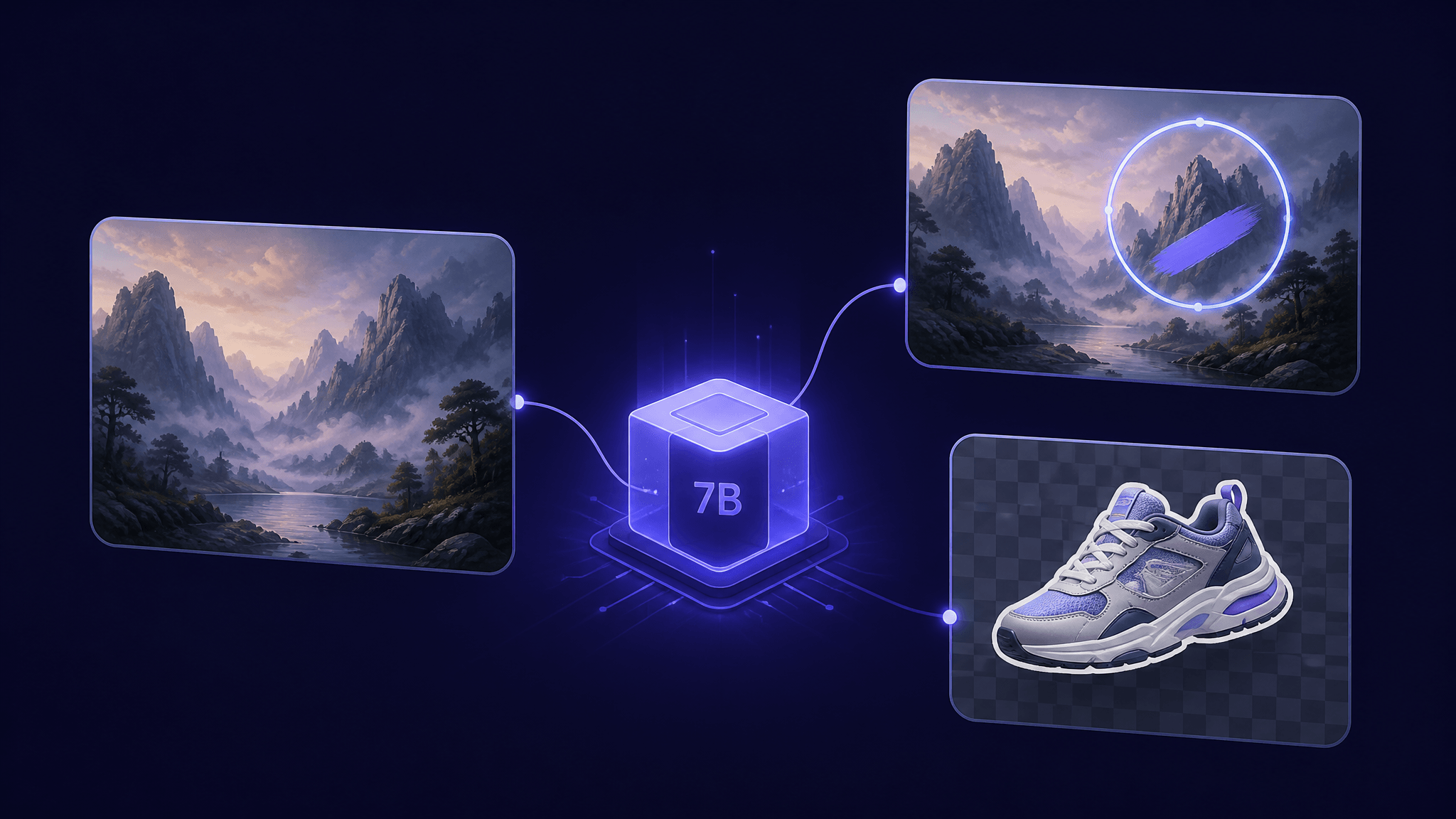
Qwen-Image-2.1: One 7B Open-Weight Model for Image Generation, Editing, and Transparent Assets
Qwen-Image-2.1 unifies text-to-image, editing, and native RGBA transparency in one 7B open-weight model. What it does, what's new, how to run it today — and the license limits before you adopt it.
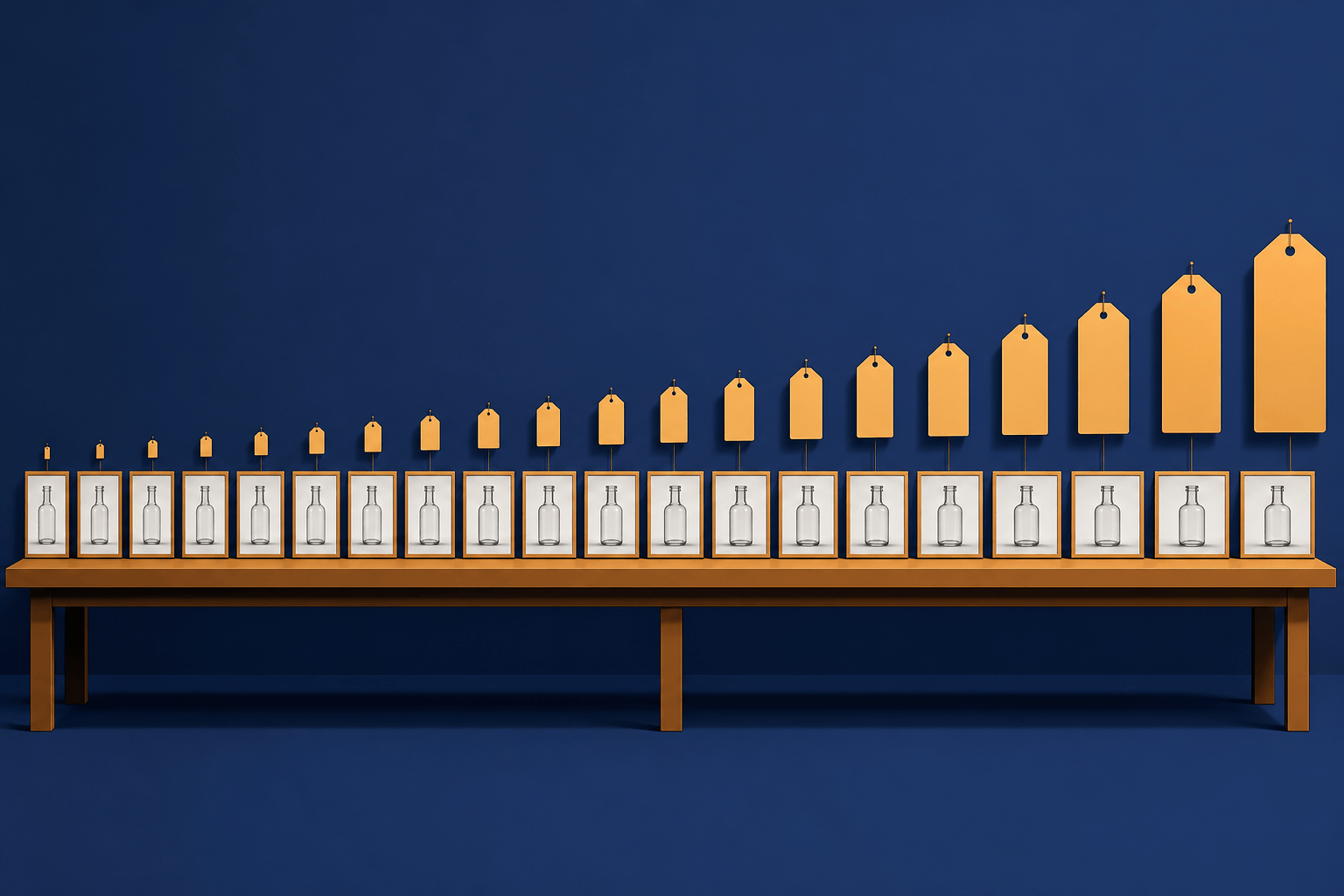
AI Image Generation Cost Comparison: What 20 Models Actually Billed
OpenRouter ran one prompt through 20 image models and recorded every bill — $0.006 to $0.134 for the same 1:1 image. The real per-image costs, and how to pick a model your budget agrees with.
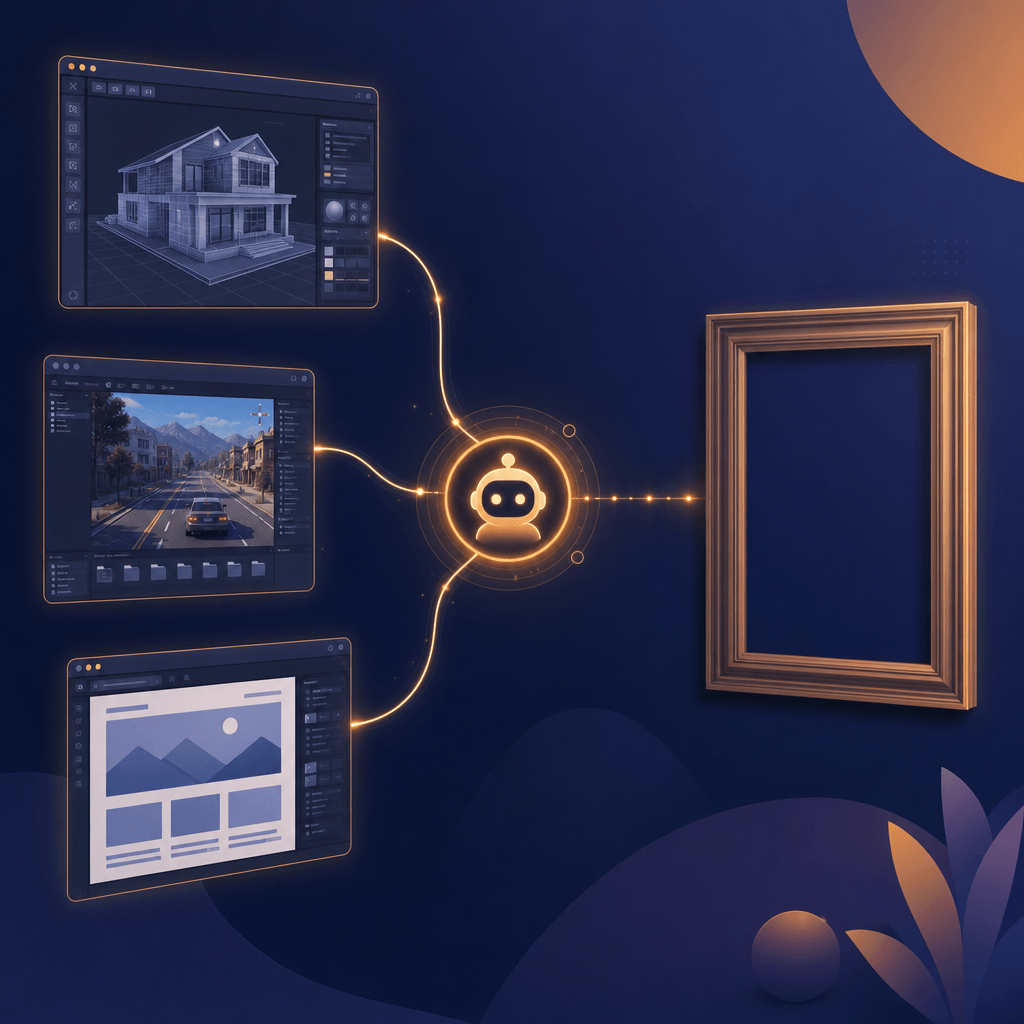
GPT-6 Astra Use Cases for Image and Design Work: What's Real So Far
A source-attributed catalog of GPT-6 Astra's real image and design use cases — 3D worlds, frontend design, media production — plus the honest gap and what it means for your tools.