Magnific Alternatives 2026: 8 AI Image Upscalers Compared
If you opened Freepik since April and noticed a new logo, you weren't imagining it. As discussed on r/SaaS on April 30, 2026, Freepik consolidated its AI image stack under the Magnific name — the upscaling brand it acquired back in 2024. Subscriptions, account credits, and the AI Suite all moved over. Users who only wanted the standalone Magnific upscaler are suddenly inside a much bigger app, and the search volume for "magnific alternatives" has spiked.
If you came here because the rebrand pushed you to look around, this comparison maps the eight AI image upscalers and upscaling-adjacent platforms worth testing in 2026 — including Sketch To as one of the lighter-weight options, and new-entry Melius, which readers keep comparing against Magnific even though it solves a different problem. We compare on the dimensions that actually matter: max upscale ratio, price, model quality, commercial license, and whether you can use it without a subscription.
Evaluation criteria: maximum upscale factor, output quality on real photos, price (one-time vs. subscription), commercial license clarity, free or trial access, and platform (web vs. desktop vs. open-source).
Last updated: October 2026
Table of Contents
- Why People Are Searching for Magnific Alternatives
- Quick Comparison Table
- 1. Magnific (Freepik) — the Rebrand Baseline
- 2. Topaz Photo — Desktop Pro Standard
- 3. Krea AI Upscaler — Up to 22K on the Web
- 4. Upscayl — Free, Open-Source, Runs on Your Laptop
- 5. Let's Enhance — Web-Based Bulk Upscaling
- 6. Clipdrop Image Upscaler — InitML's Quick Tool
- 7. Melius — a Creative Canvas, Not an Upscaler
- 8. Sketch To Image Upscaler — Lightweight, with Sketch Workflow
- How to Choose
- How to Upscale a Photo Without Magnific (Step-by-Step)
- FAQ
Why People Are Searching for Magnific Alternatives
Magnific was originally a standalone product launched in 2023, famous for hallucinating realistic detail into photos through its Creativity slider — a parameter most other upscalers lacked. Freepik acquired the company in 2024 and used the Magnific tech to power its own AI Suite.
In April 2026, Freepik finished the merger by rebranding the entire image AI surface as Magnific. The standalone Magnific.ai pricing tiers ($39 / $99 / $299 per month) are gone, replaced by Freepik's combined plans. Three things changed at once for existing users:
- Pricing was repackaged. Magnific's old $39 entry tier doesn't exist anymore — upscaling now lives inside Freepik subscriptions: Premium at $20/mo, Premium+ at $45/mo, and Pro Starter at $110/mo as of October 2026, with frequent annual discounts.
- The interface moved. You now access upscaling through the Freepik dashboard, alongside stock assets, video tools, and Pikaso.
- The Magnific-only API and Discord workflows shifted. Some power users had built scripts against the old endpoints; those need migration.
None of that makes Magnific worse — but if you only ever wanted upscaling, paying for a creative suite feels like overkill. That's why search interest for alternatives spiked the week of the rebrand. Below are eight options ranked by actual workflow fit, not by marketing copy.
Quick Comparison Table
| Tool | Max Upscale | Pricing | Subscription Required? | Commercial Use | Platform |
|---|---|---|---|---|---|
| Magnific (Freepik) | 16x | From $20/mo bundled | Yes (Freepik plan) | Yes (commercial AI license) | Web |
| Topaz Photo | Up to 16x (via Gigapixel, sold separately) | From $12.50/mo intro, then $25/mo | Yes (subscription) | Limited on Personal (orgs under $1M); full on Pro | Desktop (Mac/Win) |
| Krea AI Upscaler | Up to 22K resolution (vendor claim) | From $9/mo | Yes | Yes (paid plans) | Web |
| Upscayl | 4x desktop (up to 16x claimed) | Free (Cloud from $24.99/mo) | No (desktop); optional (Cloud) | Yes (open-source, AGPL-3.0) | Desktop (open-source) + Cloud |
| Let's Enhance | 16x | From $9/mo, pay-as-you-go option | Optional (credit packs) | Yes | Web |
| Clipdrop Image Upscaler | 2x free, 16x on Pro | Free + $15/mo Pro | Optional | Yes (Pro plan) | Web + API |
| Melius | n/a — generates up to 4K instead | From $18/mo billed annually | Yes | Yes (ownership retained; model-provider terms apply) | Web + desktop + API |
| Sketch To Image Upscaler | 4x | From $7.99/mo billed annually | Yes | Pro plans | Web |
Prices verified October 2026 from each tool's pricing page. Bundled plans may include features beyond upscaling.
1. Magnific (Freepik) — the Rebrand Baseline
The rebranded Magnific is still the photorealism leader for one specific job: inventing plausible detail in low-res photos. Its hallmark Creativity slider lets the model add textures (skin pores, fabric weave, foliage) that weren't in the original pixels. In our testing on a 768×512 portrait, Magnific at Creativity 5 produced sharper hair and skin than any other tool we tried — at the cost of occasional hallucinated details (an extra ring, a misplaced highlight) that you have to retouch.
Key Features
Creativity slider (0–10) — the headline differentiator, controls how much detail the model invents
HDR slider for tone enhancement during upscaling
Resemblance slider to keep the result close to the source
Up to 16x upscale ratio
Style transfer presets (Magnific Relight, Style Transfer)
Bundled with Freepik AI Suite (Mystic, Imagen 4, Flux models for generation), plus Magnific MCP, plugins, and ComfyUI support with a credit-based API
Pricing (Freepik plans, October 2026)
Free: limited daily generations, no high-res upscale
Premium: $20/mo (240K credits/year, includes Magnific image & video upscalers)
Premium+: $45/mo (600K credits/year, unlimited generations; adds Topaz upscalers)
Pro Starter: $110/mo (1.5M–4M credits/year for heavy production)
Annual billing is discounted frequently — the Freepik pricing page runs recurring 50%-off promotions.
Best For
Photographers and marketers who want maximum hallucinated detail and don't mind that upscaling now lives inside a broader creative suite.
Not Ideal For
Users who only want upscaling — bundled pricing means paying for stock and video features you may not use
Workflows that need predictable, non-hallucinated output (Creativity slider can over-invent)
Offline or air-gapped pipelines (web-only)
Anyone migrating an old Magnific.ai API integration (endpoints changed during the rebrand)
2. Topaz Photo — Desktop Pro Standard
Topaz Photo (the successor to Topaz Photo AI) is the desktop tool professional photographers reach for when they need to upscale, denoise, and sharpen on a Mac or PC without sending images to a cloud. Topaz has moved from perpetual licenses to a subscription model, but local processing remains the core promise: enhance on your own machine, with unlimited local rendering included.
Key Features
AI upscale, denoise, and sharpen models in one desktop app, including the new Wonder recovery models and a Standard MAX upscale model
Face recovery and dedicated models for different content types
Unlimited local rendering plus cloud image rendering on every plan
Batch processing of large folders
Lightroom and Photoshop plugin integration
Need more than the bundled upscale models? Topaz Gigapixel — now a separate subscription — scales images up to 16x
Pricing
Personal: $12.50/mo for the first 3 months, then $25/mo with an annual commitment — or $99.50 billed annually for the first year, $199/yr after that
Pro: $50/mo ($599/yr) with seat management and full commercial use
Personal includes limited commercial use: personal and commercial work is covered for organizations under $1M USD annual revenue
There is no one-time perpetual license anymore — the old $199 buy-out model is gone
Best For
Wedding, portrait, and landscape photographers who batch-process large RAW catalogs and want professional-grade local processing with continuously updated models.
Not Ideal For
Casual users — a recurring bill is harder to justify if you upscale ten images a year
Anyone who specifically wants a perpetual license — Topaz retired one-time purchases
Use cases that benefit from creative "hallucinated" detail like Magnific's Creativity slider — Topaz prioritizes faithful reconstruction over invention
Buyers comparing stated maximum upscale ratios — Topaz Photo doesn't publish one for its bundled upscale models, and 16x requires the separate Gigapixel product
3. Krea AI Upscaler — Up to 22K on the Web
Krea AI is best known for its real-time canvas, but its upscaler is one of the most aggressive on the market in raw resolution: up to 22K image upscale and 8K + 120fps video upscale on the higher plans. It's not a Magnific clone — its Enhancer now exposes AI Strength and Resemblance sliders similar in spirit to Magnific's controls, but Krea's headline capability is sheer output size rather than invented photorealistic detail. If your job is to push a 1080×1080 social asset to billboard resolution, Krea is the web tool that goes biggest.
Key Features
Image upscale to 22K resolution and video upscale to 8K + 120fps frame interpolation on top tiers (vendor claim)
Enhancer scales 2x–32x with AI Strength, Resemblance, Clarity, and Sharpness controls
Multi-model approach (Flux, Krea 3, plus their realtime models)
Real-time canvas for sketch-to-image work
40M+ creators on the platform
Pricing
Free: 100 compute units/day, no commercial license
Basic: $9/mo (5,000 units)
Pro: $35/mo (20,000 units, all video models)
Max: $105/mo (60,000 units, expandable up to 100K; 22K upscale)
Yearly billing runs about 40% cheaper ($5.25 / $21 / $63 per month).
Best For
Designers working on large-format prints, billboards, motion graphics for OOH placement, or anyone who needs both upscale and a real-time canvas in one subscription.
Not Ideal For
Users who only want a quick 4x upscale — you're paying for a feature surface you won't use
Compute-unit pricing can be opaque — heavy video upscaling burns credits faster than expected
Free tier blocks all commercial use
4. Upscayl — Free, Open-Source, Runs on Your Laptop
Upscayl is a free, open-source upscaler built on Real-ESRGAN. It runs locally on Windows, macOS, and Linux, costs nothing, and the GitHub repo has crossed 51K stars. For users who want a Magnific replacement but refuse to pay another SaaS bill, Upscayl is the answer that gets recommended on Reddit threads more than any other tool on this list. A newer Upscayl Cloud service adds subscription upscaling if you'd rather not run anything locally.
Key Features
4x default upscale on desktop; the official site now claims up to 16x
Multiple AI models (Real-ESRGAN, Remacri, Ultramix, plus community models)
100% local on desktop — no upload, no privacy concerns
Free and open-source under AGPL-3.0 (the license changed from the MIT that older roundups still cite)
Batch processing supported
Mac, Windows, and Linux desktop builds, plus a new cloud option
Pricing
Desktop: free, full local upscaling, AGPL-3.0 license
Upscayl Cloud: free trial with 10 credits; Pro plan at $24.99/mo for 300 credits with rollover (up to 256MP images; a Business tier pushes to 512MP)
Best For
Developers, hobbyists, anyone with a privacy-sensitive workflow, or users who want to avoid recurring fees entirely. Also the right pick if your input is line art, anime, or pixel art — community Real-ESRGAN variants handle those well.
Not Ideal For
Users without a discrete GPU — upscaling on CPU is slow (think minutes per image)
Anyone who needs Magnific's Creativity slider (Real-ESRGAN faithfully reconstructs but doesn't invent detail)
Teams that need a hosted API for automation (the desktop app has none)
5. Let's Enhance — Web-Based Bulk Upscaling
Let's Enhance has been in this market since 2017 and remains a solid Magnific alternative for straightforward bulk upscaling without a creative-suite tax. The interface is uncluttered: drop in images, pick a model, get results. It supports 16x upscale, batch processing, and provides API access for automation.
Key Features
16x maximum upscale with multiple AI models (photo, digital art, smart)
Batch processing of up to 50 images at once
API access on paid plans for automation
Color correction, light enhancement, and tone adjustment options
Pay-as-you-go credit packs (no required subscription)
E-commerce focused presets (product photo upscaling)
Pricing
Free trial: 10 credits (upscales up to 8 megapixels, watermarked)
Subscription: Starter $9/mo billed annually ($12 month-to-month, 100 credits/mo, upscaling up to 256MP); Pro and Max tiers add credits and resolution headroom
Credit packs: pay-as-you-go without a subscription
Best For
E-commerce teams, agencies, and anyone with a steady but not-huge volume of images who don't want to commit to a monthly plan. The credit-pack model is rare and useful.
Not Ideal For
Workflows that need a Creativity-slider-style detail invention
Real-time canvas users (no live preview while you sketch)
Photographers used to desktop tools — Let's Enhance is web-only
6. Clipdrop Image Upscaler — InitML's Quick Tool
Clipdrop is a web suite of single-purpose image tools, originally built by InitML and now operated under the Jasper family after passing through Stability AI's hands. Its Image Upscaler is the fastest free upscaler we tested — usually under 5 seconds per image. It's not as feature-rich as Magnific or Krea, but for quick web work at the free tier's 2x cap, it's the lowest-friction option.
Key Features
Free tier: 2x upscale, 20 images per 24h, no login for single-image use
Pro tier: 16x high-resolution upscaling, 1,000 images per 24h, queue priority
API access with usage-based pricing on Pro plans
Suite of related tools (Cleanup, Background Remover, Replace Background, Uncrop)
Pricing
Free: 2x upscale with a daily limit
Pro: $15/mo (more headroom, 16x high-resolution output, API access)
Best For
Developers prototyping with the API, social media managers who need fast one-off upscales, and anyone shopping for a Magnific replacement at a lower monthly cost than Freepik's bundles.
Not Ideal For
Users who need more than 2x on the free tier — that used to be 4x, but the free cap is now 2x
Workflows requiring a Creativity slider (Clipdrop reconstructs faithfully)
Bulk batches of 100+ images — Let's Enhance handles those better
7. Melius — a Creative Canvas, Not an Upscaler
Melius keeps showing up next to Magnific in search results, so let's settle the comparison directly: as of October 2026, Melius has no dedicated photo upscaler — its documentation lists no upscale tool anywhere. Melius is an "AI-native operating system for creatives": a node-based canvas where one subscription unlocks 116+ generation models (GPT Image 2.5, Nano Banana Pro, Flux 3, Seedream, Kling, ElevenLabs and more) for images, video, audio, and text, with an AI agent that can chain steps for you.
That changes what "Melius vs Magnific" actually means. Magnific enlarges a photo you already have and can invent detail along the way; Melius generates new images natively at up to 4K — GPT Image 2.5 outputs 1K/2K/4K (2K by default, and Melius's docs flag resolutions above 2560×1440 as experimental), while Flux 3 reaches 4K. If your input is an existing low-res photo, Melius can't replace Magnific. If you're producing new creative work and resent paying for a whole stock-photo suite just to reach high-resolution output, Melius competes with Freepik's bundle — one credit pool covering image, video, and audio, with a REST API, MCP server, and CLI for automation.
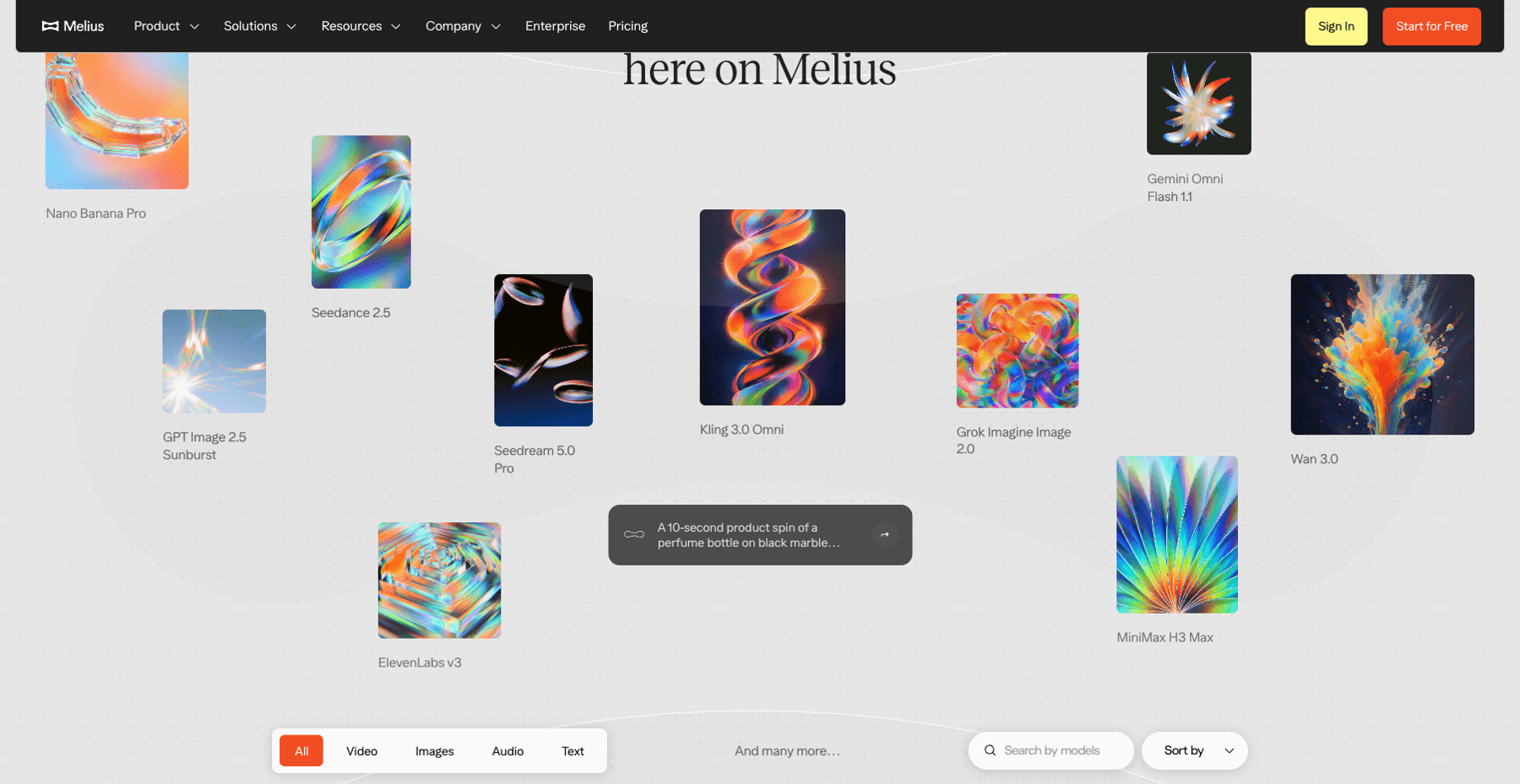
Source: melius.com/models (accessed October 2026)
Key Features
Node-based creative canvas with an AI agent (Mel) and multiplayer collaboration
116+ models across image, video, audio, and text on one subscription
Native high-resolution generation: up to 4K on leading image models (2K default; above 2560×1440 experimental per docs)
Credits cover images, videos, and agent workflows — expected cost is shown before each generation
REST API, MCP server, and CLI for scripted workflows
Desktop app alongside the web app
Pricing
Free: $0 with limited trial credits
Creator: $20/mo month-to-month, or $18/mo billed annually — 20,000 credits/mo (Melius estimates ≈300 images or 14 videos)
Growth: $50/mo ($45 annual) — 50,000 credits/mo (≈745 images, vendor estimate)
Professional: $110/mo ($99+ annual) — 110,000–300,000 credits/mo
Team: $63/seat/mo (70,000 credits per seat, 2–10 seats)
Additional credit packs can be purchased on any plan
Best For
Marketing and creative teams producing original multi-format work (images plus video) under one subscription; developers who want canvas automation through API/MCP/CLI; and anyone whose "Melius vs Magnific" question is really "should I generate high-res or upscale?" — if it's the former, Melius is the stronger platform play.
Not Ideal For
Enlarging existing photos — there is no upscaler, so it cannot substitute for Magnific's core job
Fans of Magnific's Creativity-slider enlargement workflow
Budget solo users — the paid entry point is $18–20/mo for roughly 300 images, while Sketch To's annual Basic covers about 1,200 images for $7.99/mo
Offline or air-gapped pipelines (account-based web/desktop app)
8. Sketch To Image Upscaler — Lightweight, with Sketch Workflow
Sketch To is positioned as a sketch-to-image platform, but its Image Upscaler is one of its five core tools, sitting alongside Image to Sketch, Sketch to Image AI, Background Remover, and Uncrop. It's not trying to compete with Magnific on photorealistic detail invention — it's the right pick if upscaling is one step in a sketch-driven creative workflow rather than a standalone job.
Key Features
4x upscale with two model tiers (Standard fast, Professional high-detail)
Bundled with Background Remover, Uncrop, and Image to Sketch / Sketch to Image AI
Web-based, runs in the browser
New users get 4 free credits on signup
Same credit pool covers all tools — no per-feature billing
Commercial license included on Pro (Basic is personal-use)
Pricing
Basic: $7.99/mo billed annually ($10 month-to-month) — 2,400 credits/year ≈ 1,200 images (personal use)
Pro: $15.99/mo billed annually ($24 month-to-month) — 9,600 credits/year ≈ 4,800 images, commercial license included
Credit packs available as one-time top-ups (valid 1 year)
One image typically costs 2 credits
Best For
Illustrators, product designers, and concept artists who already use Sketch To for sketch ↔ image work and want their upscaler in the same app. Also a good pick for anyone whose deliverables are 4x upscales of sketch-derived art rather than 16x photographic enlargements.
Not Ideal For
Users who need 16x or 22K output — Magnific, Krea, and Let's Enhance go bigger
Pure photography workflows where Topaz's local desktop processing fits better
Anyone needing a Creativity slider for hallucinated photo detail
API-driven pipelines (use Clipdrop, Let's Enhance, or Melius APIs instead)
How to Choose the Right Magnific Alternative
The eight tools split cleanly by job. Pick by what you actually need to do, not by marketing copy:
You want Magnific's hallucinated detail without the Freepik bundle: There isn't a clean clone. The closest behavioral match is Krea AI at $9/mo Basic.
You're a working photographer with a RAW catalog: Topaz Photo from $12.50/mo (intro, annual commitment). Local processing, continuously updated models.
You refuse to pay a subscription: Upscayl is free and open-source. Runs on your laptop.
You want maximum resolution (billboard-grade): Krea Max at $105/mo for 22K image / 8K video.
You want bulk e-commerce upscaling: Let's Enhance at $9/mo or pay-as-you-go credit packs.
You want the cheapest hosted upscaler with API access: Clipdrop Pro at $15/mo.
You want one subscription to generate (not enlarge) across image, video, and audio, with API/MCP access: Melius Creator at $18/mo billed annually.
You upscale as part of a sketch-driven workflow: Sketch To from $7.99/mo (billed annually) bundles upscaling with sketch ↔ image conversion, background removal, and uncrop.
Budget picks: Upscayl (free), Sketch To Basic ($7.99/mo annual), Clipdrop Pro ($15/mo). Pro picks: Topaz Photo Pro ($50/mo), Krea Max ($105/mo). Magnific stand-in (managed cloud, photorealistic): Magnific via Freepik Premium+ ($45/mo).
How to Upscale a Photo Without Magnific (Step-by-Step)
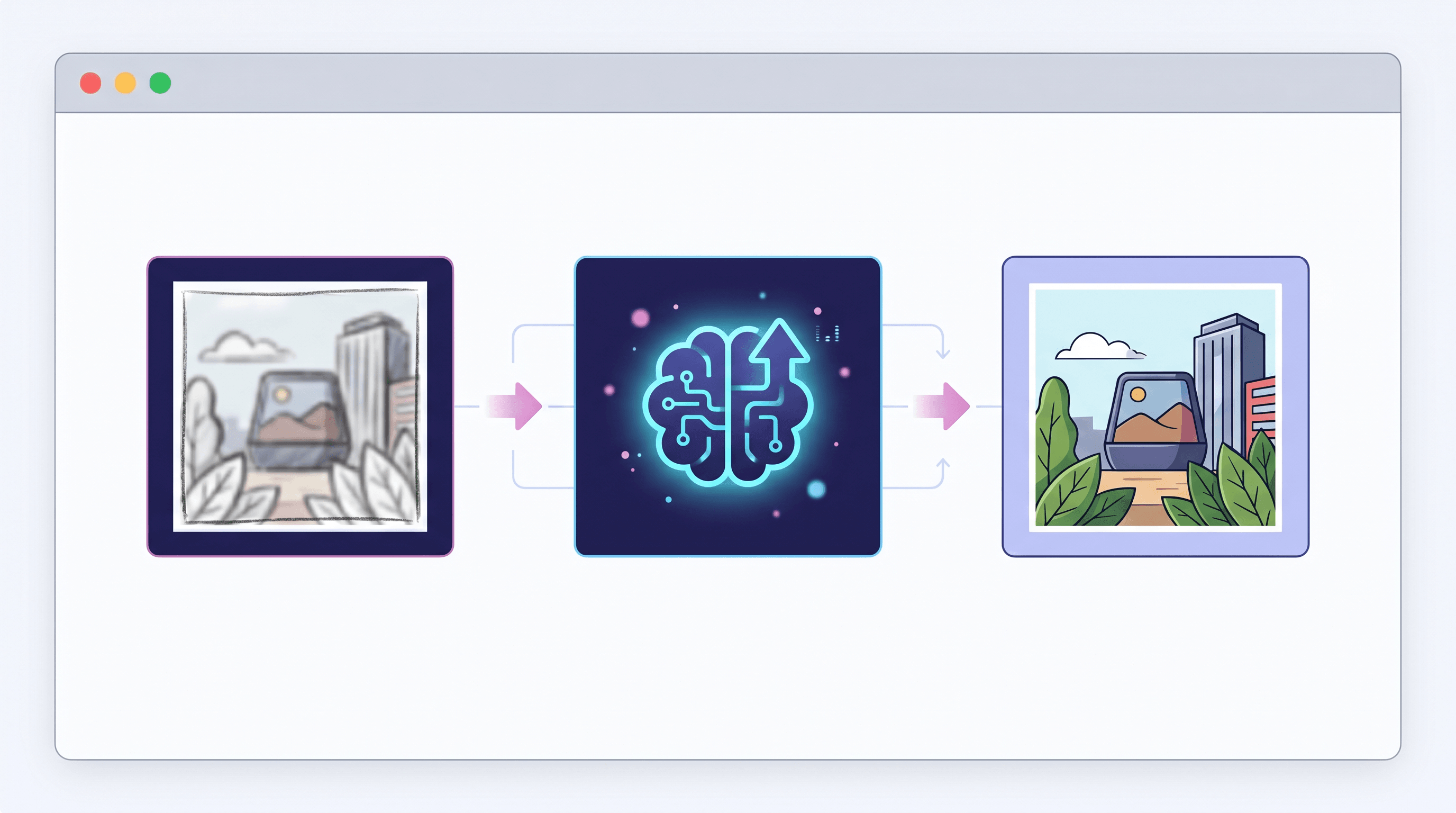
Every upscaler above follows a similar three-step workflow. Here's the cleanest path using Sketch To Image Upscaler, which we found has the simplest interface for non-photographers:
Open the Sketch To Image Upscaler in your browser. No install required. Drag and drop your file (JPG, PNG, or WEBP).
Pick the model. Standard renders in about 3 seconds and is good enough for social media. Professional takes 10–15 seconds and produces sharper textures — use this for client deliverables or print.
Choose your upscale ratio (2x or 4x). For most web use, 2x is enough. 4x is the maximum Sketch To supports — if you need bigger, use Krea or Let's Enhance.
(Optional) Chain with Background Remover or Uncrop. Because Sketch To bundles these tools on the same credit pool, you can drop the upscaled output straight into Background Remover without re-uploading.
Download and verify on a real device. Always check the upscaled file at 100% zoom on the screen it'll be displayed on — upscaler artifacts hide at fit-to-screen sizes.
For reference, the comparable workflows on the other tools:
Magnific: open Freepik AI Suite → Magnific Upscaler → adjust Creativity, HDR, Resemblance sliders → generate.
Topaz Photo: open the desktop app → drag image → let the models pick settings → tweak Sharpen/Denoise/Upscale → save.
Upscayl: open the desktop app → choose model → set scale → batch process.
FAQ
Is Magnific still usable in 2026?
Yes — Magnific still works, it's just delivered through Freepik now. The standalone magnific.ai pricing is gone, but the same upscaling models (Magnific Upscaler, Magnific Relight, Magnific Style Transfer) live inside Freepik subscriptions starting at $20/mo (Premium). If you had an old Magnific account, it should have migrated automatically. The main change is interface: you access upscaling from the Freepik dashboard rather than a Magnific-only login.
What are the best free alternatives to Magnific?
Three tools have meaningful free tiers: Upscayl (free open-source desktop app, runs locally with no limits, plus a 10-credit cloud trial), Clipdrop Image Upscaler (2x upscale free with a daily limit, no login for single-image use), and Krea AI (100 compute units/day on free tier, but no commercial use). For Sketch To, new users get 4 free credits to test the upscaler alongside the rest of the toolset before committing to a $7.99/mo Basic plan (billed annually).
Which AI upscaler is best for restoring old photos?
For old photos with grain, scratches, and color fade, Topaz Photo is the strongest answer. It combines denoise, sharpen, and upscale in one pass, plus has dedicated face recovery models that other tools lack. Magnific is a close second if you want hallucinated detail recovery (Creativity slider 4–6 works well for old portraits). For free, Upscayl with the Real-ESRGAN model handles old photos reasonably well, though without dedicated face restoration.
Magnific vs Topaz: which should I pick?
They're built for different jobs. Magnific (Freepik) is web-based, subscription-priced, and excels at hallucinating creative detail into images via its Creativity slider. Topaz Photo is desktop-based, also subscription-priced these days (from $12.50/mo intro, then $25/mo with an annual commitment — the old $199 one-time license is retired), and optimized for faithful reconstruction of real photographs. If you're a photographer batch-processing client work, Topaz wins. If you're a marketer or designer creating new visuals from low-res references, Magnific wins.
Can I upscale images without a subscription?
Yes. Upscayl's desktop app is free, open-source, and runs entirely on your machine. Let's Enhance sells pay-as-you-go credit packs if you'd rather avoid a monthly bill, and Clipdrop's free tier covers quick 2x jobs. Topaz no longer offers one-time licenses, Magnific requires a Freepik plan, and Melius doesn't upscale at any price.
Melius vs Magnific: which should I pick?
Different jobs. Magnific (inside Freepik, from $20/mo) upscales photos you already have and can invent photorealistic detail with its Creativity slider. Melius (from $18/mo billed annually) is a multi-model creative canvas with no upscaler — it generates new images at up to 4K, and its credits also cover video, audio, and agent workflows. Enlarging an existing photo? Pick Magnific or any dedicated upscaler in the table above. Producing new creative work and weighing Freepik's bundle against a canvas-style platform with API/MCP access? That's the comparison Melius is actually built for.
Is the Freepik-Magnific rebrand permanent?
Based on Freepik's communications around the April 2026 rollout, yes. The standalone magnific.ai domain redirects to Freepik, the original Magnific.ai pricing tiers have been removed, and the unified billing system now runs through Freepik. The Magnific name is being kept (it's a strong brand), but as a feature inside Freepik rather than a separate product. If you were using Magnific's old API, plan for endpoint migration.
Conclusion
The Freepik–Magnific rebrand isn't the end of standalone upscaling — it just rearranged the eight options worth using in 2026. Magnific (Freepik) is still the photorealism leader if you want hallucinated detail and don't mind the bundled pricing. Topaz remains the desktop standard, now under a subscription model. Upscayl is the free fallback. Krea, Let's Enhance, and Clipdrop each fit specific niches. Melius is the platform play when you're generating — not enlarging — and want one credit pool across media. And Sketch To is the right call when upscaling is one step in a sketch-driven workflow rather than the whole job.
Upscaling a sketch result, a product photo, or a social asset? Try Sketch To free → — Image Upscaler bundled with Background Remover, Uncrop, and dedicated sketch ↔ image AI on a single credit pool.
Transform Your Images with AI
Turn sketches into stunning images, remove backgrounds, swap faces, and more — all powered by AI.
Try Sketch To FreeShare
SketchTo Team
Tech writer covering AI tools, image processing, and creative workflows.
Related Articles
6 Best BeFunky Alternatives for Photo Effects and Toon Filters (2026)
Looking for something similar to BeFunky? Compare six alternatives — Fotor, SketchTo, PicMonkey, Pixlr, Picsart, and Photopea — on cartoon filters, effects, and batch editing.

Best Art Craft Apps: AI Tools for Craft and Design Ideas
A task-by-task guide to art and craft apps: what the trending ArtCraft open-source suite actually is, plus the AI converters — bead patterns, stencils, coloring pages, sketch-to-render — that help real craft projects.
PhotoCraft vs Photoshop: Is the Open-Source Photoshop Alternative Worth Downloading?
PhotoCraft is a free, open-source Photoshop alternative built in Rust. See what v0.7.0 can and can't do against Photoshop, whether it's safe to download, and how to install it.