
Harry Potter Anime AI: What the Malfoid Trend Is and How to Make Your Own Clips
No, there is no official Harry Potter anime. The polished "Harry Potter anime" clips flooding X, TikTok, and YouTube right now are AI-generated fan works — and the current wave has a name: Malfoid. Search interest in the phrase harry potter anime ai exploded in October 2026 after a year of near-zero quiet, and this time the clips move: locked characters, dialogue, tsundere micro-expressions, all staged like episodes of a show that doesn't exist.
This article explains what the Malfoid trend actually is, why it came back, how the clips are made (with the documented workflow and prompt patterns), how to make a still image version yourself, and where the copyright lines sit.
Key takeaways
- "Harry Potter anime AI" refers to fan-made AI anime clips and images — there is no official anime series, and HBO's Harry Potter show is live-action.
- The October 2026 wave is called Malfoid: AI anime clips reimagining Draco Malfoy as a girl, serialized like vertical mini-episodes.
- The documented workflow is: lock a character sheet → storyboard a short emotional beat → animate one action per clip → post as a numbered series.
- For still images, any identity-preserving anime style generator gets you the look — no "Harry Potter" preset required.
- The characters belong to Warner Bros. Keep it transformative and personal, or design an original-character stand-in.
What is the Harry Potter anime AI trend?
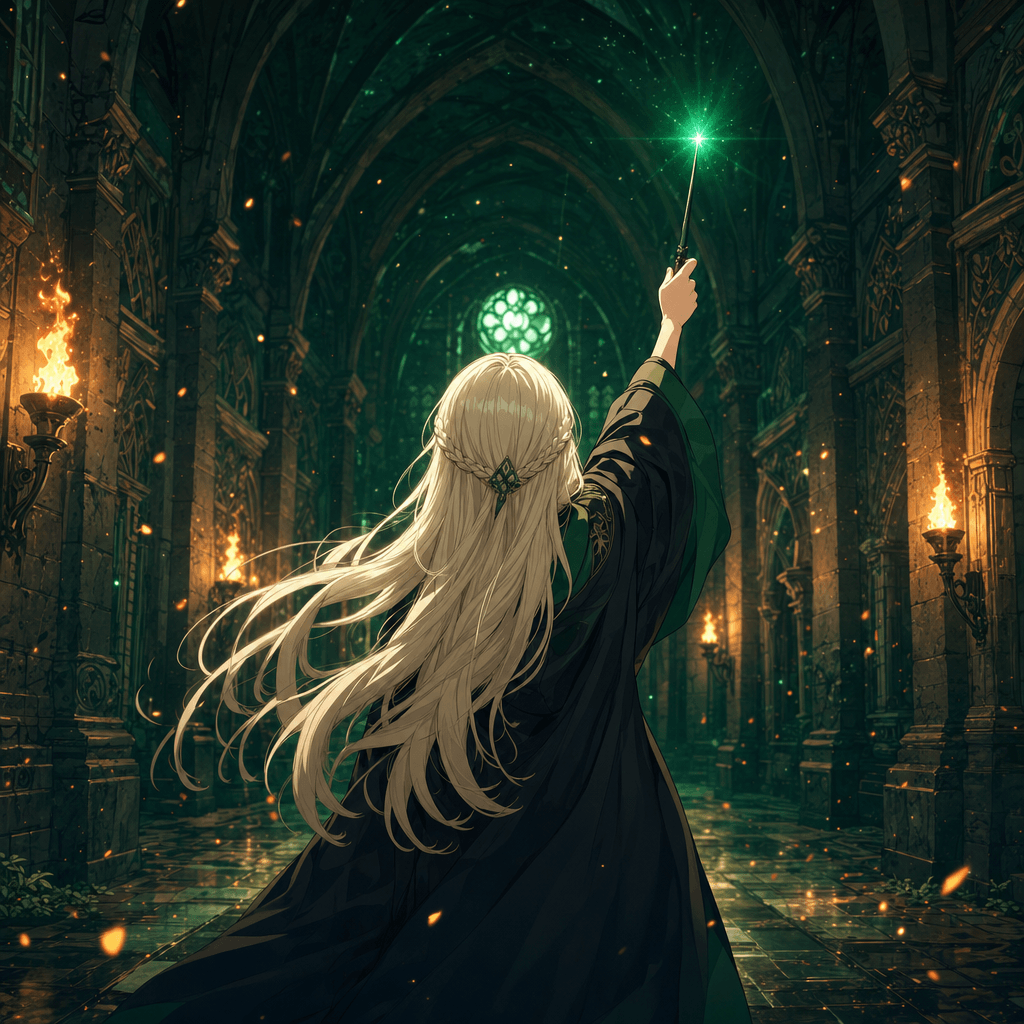
The trend is a cluster of AI-generated anime clips and images that reimagine the Wizarding World in modern anime style. The name everyone uses for the current wave is Malfoid — a tag X (Twitter) creators gave to AI anime clips that treat Draco Malfoy as a girl: waist-length platinum hair, sharp green eyes, black-and-emerald robes, and the proud, defensive energy fans already associate with Slytherin's favorite rival.
The format matters as much as the character. These aren't still memes. They're short vertical clips, usually under a minute, staged like scenes from a school-life anime: a Yule Ball invitation in a candle-lit great hall, a corridor confrontation, a library-table spell practice where the character almost fails and blushes about it. Creators number them like episodes ("Malfoid #4: The Dance Question") and reply to their own threads so a profile reads like a playlist.
What made the tag spread is a reusable formula: a globally known cast, a gender-bend hook that reopens old shipping debates, and AI video that finally holds a face steady enough for a micro-expression to land. As the trend explainer on Autoweeb documented, the breakout posts lock the Slytherin palette and Hogwarts-style props, then render them in clean contemporary anime linework — a look commenters keep comparing to the soft palettes of shows like Frieren: Beyond Journey's End.
Why it exploded in October 2026
Google Trends tells the timing story cleanly. Over the past 12 months, US search interest for "harry potter anime ai" sat at nearly zero from late 2025 through mid-2026 — then exploded in a single spike: the curve lifts off in late September 2026 and touches the top of the chart in October, exactly when the Malfoid clips took over X. In the same data, "malfoid" shows as a breakout rising query (+184,100%), and weekly relative interest jumped from 5 to 40 across the first two weeks of October. These are provider estimates of search interest, not exact search counts — but the shape is unmistakable: a year of quiet, then one wave with a name.
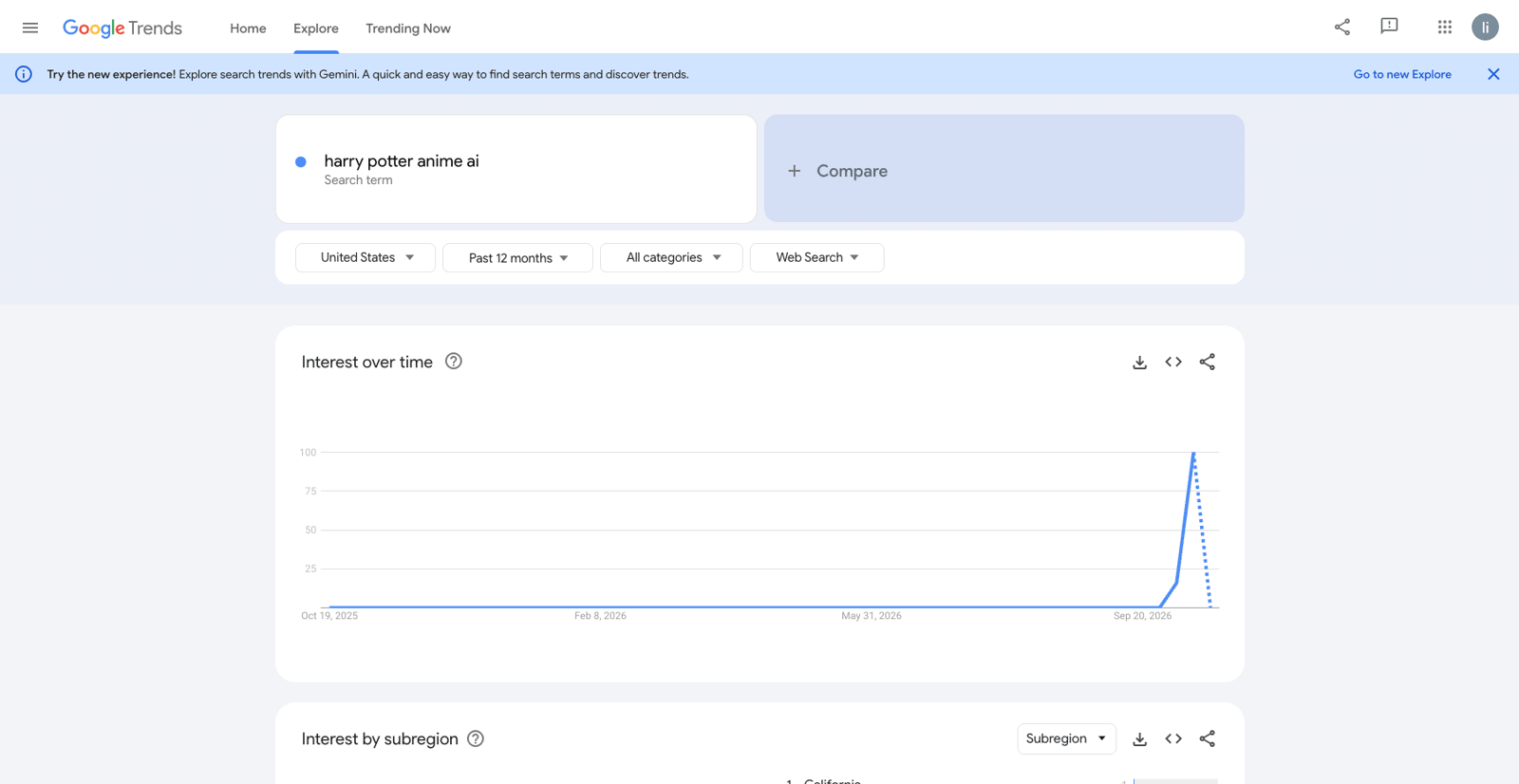
Relative search interest for "harry potter anime ai" (US), past 12 months. Source: Google Trends, accessed October 19, 2026.
Relative search interest for "harry potter anime ai" (US), past 12 months. Source: Google Trends, accessed October 19, 2026.
Anime-style transformations themselves aren't new — photo-to-anime generators and tutorials have been around for years. What's new is the serialized character: the same face, the same palette, episode after episode, with emotional continuity that gives people a reason to follow an account rather than just like a picture. The format explains both the staying power and why searches finally have a specific word to type.
Is there a real Harry Potter anime?
No. There has never been an official Harry Potter anime series. HBO's upcoming Harry Potter series is live-action, and no anime studio has announced a Wizarding World project. The confusion is real, though — and measurable. One of Google's "People also ask" results for this topic is literally "Is the new Harry Potter AI generated?", and related searches include "Malfoy anime where to watch" — viewers hunting for episodes that don't exist.
When a r/anime user asked "What anime does the harry potter AI videos come from?" in mid-October 2026, the top reply claimed the clips' final video generation runs on ByteDance's Seedance 2.0/2.5 video models, while other commenters compared the art style to Fate/Strange Fake. Treat both as community observations, not confirmed production details — no creator has published a full pipeline breakdown. What's safe to say: the clips are AI-generated fan works assembled from multiple AI tools, in styles deliberately close to real anime shows, which is exactly why they fool people.
How the clips are actually made
The creators driving the trend follow a documented four-step pipeline, described in detail in the Autoweeb breakdown and visible in how the accounts post. None of it requires an animation degree — it requires consistency discipline.
Step 1 — Lock a character sheet. Before any motion, creators generate a reference set: front, three-quarter, and profile views plus neutral, smug, blush, and angry expressions. Every detail that should survive between episodes gets named precisely in the prompt — hair length and part, which side wears the crest, the exact tie stripes.
Step 2 — Storyboard one short beat. The clip structure that made the trend is three panels: hook (establishing shot, relationship clear), turn (the question or confrontation), land (hold on the reaction — the blush, the averted eyes, the clipped denial). One line of dialogue, one lie, one face that betrays it.
Step 3 — Animate one action per clip. Motion prompts stay minimal — a glance, a blush deepening, hair sway, a slow push-in — because the dialogue and the expression carry the scene, not the spectacle.
Step 4 — Publish like a serial. Numbered titles, threads that read like playlists, captions written like fanfic chapter names.
The prompt patterns follow a repeatable anatomy. This is the documented character-sheet template (adapted, with variables marked) — swap the bracketed parts for your own character:
[CHARACTER NAME], young woman, waist-length platinum blond hair center part,
pale skin, sharp jade green eyes, black wizard-academy robe with [HOUSE CREST],
grey sweater vest, white collar, green and silver striped tie,
arrogant half-lidded default expression, clean modern anime linework
And a scene still, same anatomy with a setting block added:
[CHARACTER NAME] seated at wooden table in green-lit common room, stone arches,
levitating white feather with wand, concentrated expression, sweat drop on temple,
open spellbook foreground, cinematic anime shading
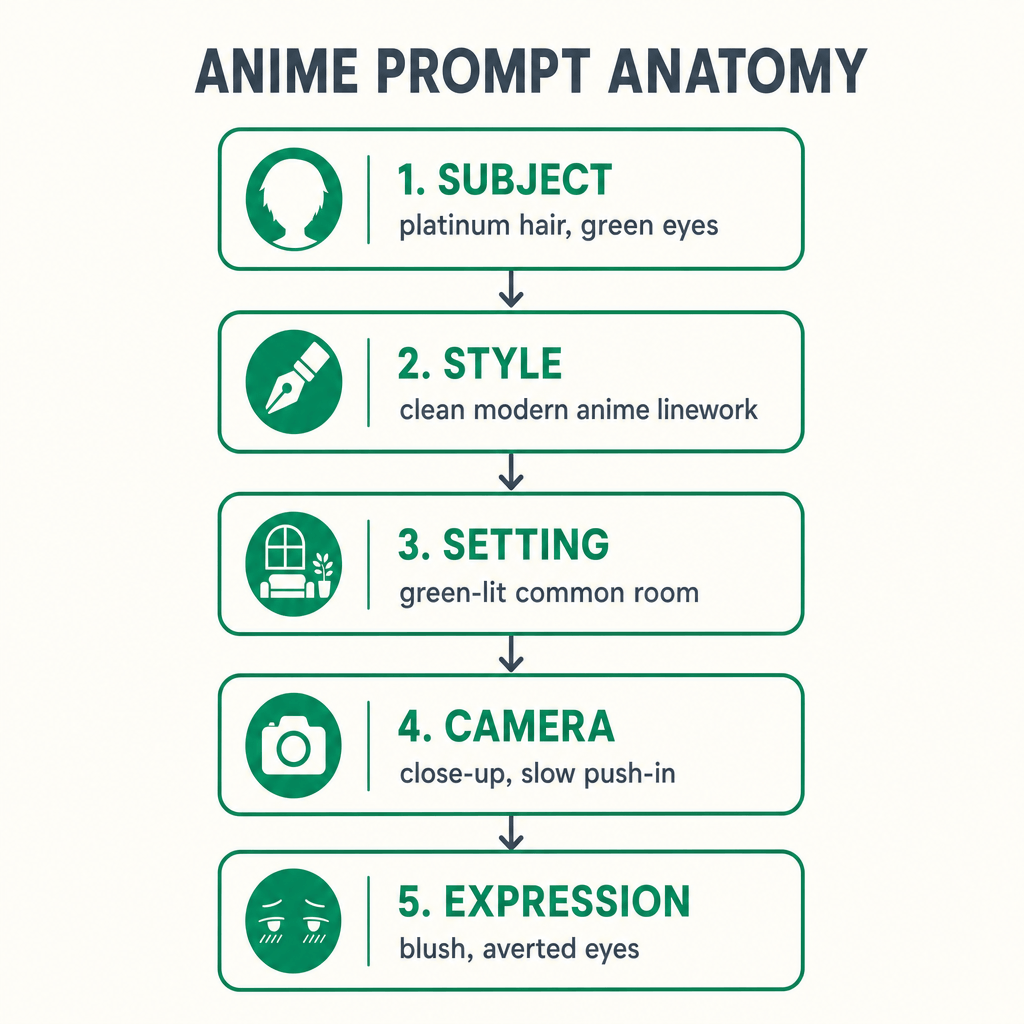
Every block does one job: the subject block fixes identity, the style block fixes the era and linework, the setting block fixes mood lighting, and the expression block fixes the emotional beat. When a clip drifts off-model, it's almost always because one of those blocks got vague.
Making a still image: the no-video-editor path
If you don't need motion, you can skip the video stack entirely. The image-side version of this trend is a style transfer: upload a photo (yours, or a character design you own), apply an anime style, keep the person recognizable. Dedicated "Harry Potter style" galleries exist on fandom tool sites — AnimeGenius hosts a Harry Potter style gallery with fifty-plus community generations — but general anime generators don't need an IP-specific preset to get the look.
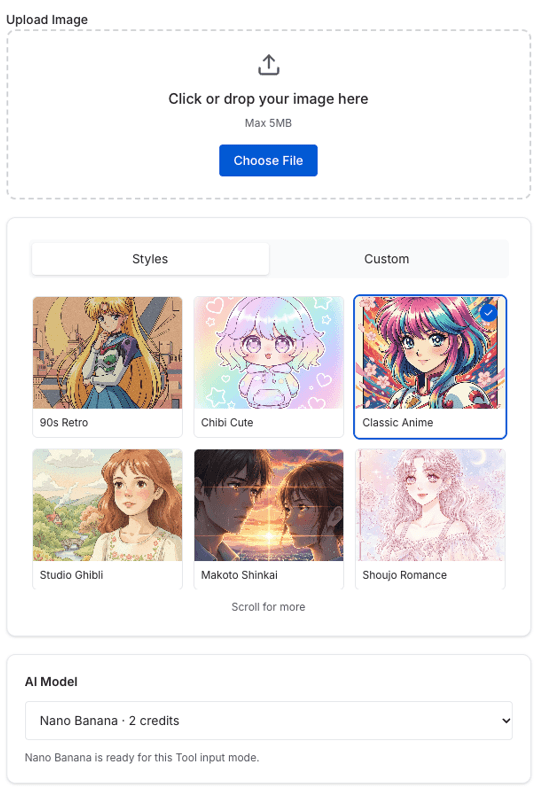
On SketchTo's Anime Style Generator, for example, you upload an image (up to 5MB), pick a preset — Shounen Action, Shoujo Romance, Classic Anime, a Ghibli-style or Shinkai-style look, Cyberpunk Anime, Watercolor, or write a custom prompt — then choose a model and transform. The presets map directly onto the trend's aesthetics: Shoujo Romance for ball-room beats, Shounen Action for corridor confrontations. Per-run credit costs are shown before you generate and vary by the model you pick — currently 2 to 8 credits per run — and you get a side-by-side compare against the original. SketchTo says the generator preserves recognizable features like face shape and eye position — a vendor claim, but the whole point of this trend is staying you, just re-drawn, so test it with your own photo before committing credits.
If you want the same look today: open the Anime Style Generator, upload a photo, start with Shoujo Romance or Classic Anime, and iterate the custom prompt with the anatomy above — one variable at a time, so you know which block changed the result.
The IP reality check
Here's the part the trend's biggest accounts don't put in their captions. The characters, names, and setting belong to Warner Bros. — fan enthusiasm doesn't transfer the rights. Everything above is legal to read; what you publish is your call, so treat this as practical caution, not legal advice.
The working norms that have kept fan artists safe for decades apply here too:
- Keep it transformative. Reimagining a character in a new style and new scenes is the classic fan-work posture. Tracing official stills or copy-pasting studio marketing is not.
- Personal use is the safe lane. Posting fan art on your own account is broadly tolerated by rights holders; monetizing HP-branded content — prints, ads on compilations, paid commissions — is where takedowns start.
- Check the platform you generate on. SketchTo's terms of service, like most platforms', require you not to infringe others' intellectual property and note that content-safety systems operate. That contract sits between you and the tool regardless of what fandom does elsewhere.
- The durable exit is the OC path. The Autoweeb breakdown expects many creators to eventually outgrow the label and keep the palette anyway — platinum rival, green house pride, tsundere beats — with the names and marks changed. That path loses nothing visually and gives up the takedown risk.
Quick answers
Is the new Harry Potter anime AI-generated? The viral clips, yes — they're fan-made AI works. There is no official anime, and HBO's production is live-action.
What AI model makes the Harry Potter anime videos? No single confirmed answer. One visible community attribution credits ByteDance's Seedance video models for the final pass, with image models used upstream for character sheets and stills. Creators use multiple tools; none has published a verified pipeline.
Can I make and post my own? Yes — the workflow above is documented and the tools are public. Keep it transformative, keep it personal, read your generator's terms, and consider an original character if you plan to grow a series.
The takeaway
The Harry Potter anime AI trend is what happens when a fandom's oldest format — the "what if it were an anime" daydream — meets tools that can finally hold a face across scenes. The tag will cool the way the 2025 wave did; the underlying skill won't. Lock your character, storyboard one honest beat, and post it small. Whether the character wears a famous crest or one you invented is the only real decision left.
Transform Your Images with AI
Turn sketches into stunning images, remove backgrounds, swap faces, and more — all powered by AI.
Try Sketch To FreeShare
SketchTo Team
Tech writer covering AI tools, image processing, and creative workflows.
Related Articles

Qwen-Image-2.1 GGUF: Which Quant to Download and How to Run It in ComfyUI
All Qwen-Image-2.1 GGUF quants with real file sizes, which tier fits your VRAM, a working ComfyUI-GGUF setup, and the two errors everyone hits.
How to Make a Coloring Book: From Photos to a Print-Ready Book
Turn your photos or one theme into a complete printable coloring book: generate consistent AI coloring pages, assemble a margin-safe PDF, and compare printing vs KDP with real cost math.
How to Make Your Own Funko Pop: 3 Real Routes and What They Cost
Official Funko customizer, handmade makers, or DIY — see real prices and lead times for a personalized Funko Pop, then preview your design free with AI before you pay.