AI Image Watermarks, Explained: Visible, Invisible, and C2PA Content Credentials
AI Image Watermarks, Explained: Visible, Invisible, and C2PA Content Credentials
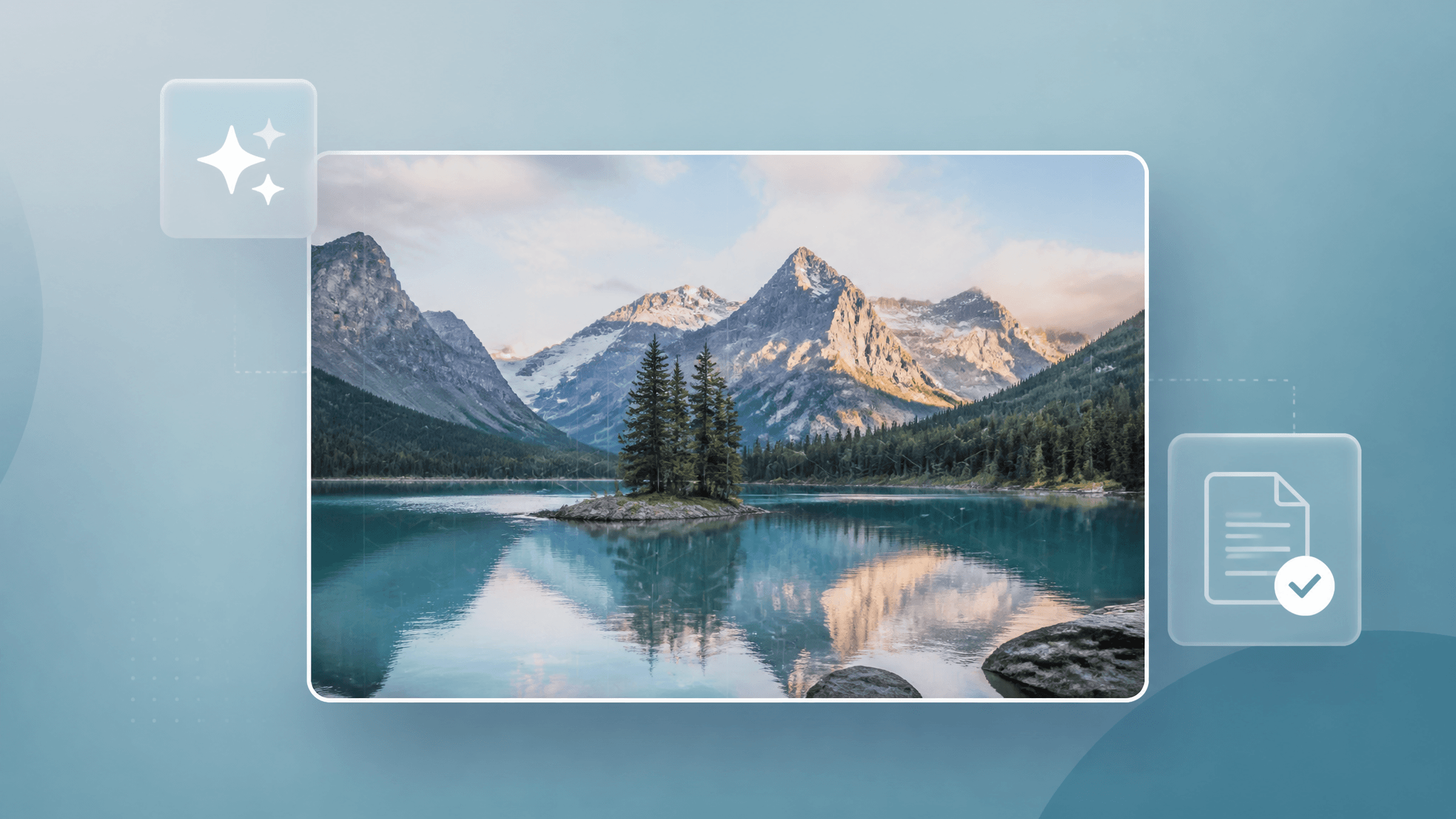
In August 2026, Google made the visible AI watermark optional in Gemini and Flow. Turn the new "Media watermark" setting off, and the sparkle badge disappears from images, videos, and music made with Nano Banana and Omni models. But "no visible watermark" does not mean "no AI marking." The image still carries an invisible SynthID watermark and C2PA metadata, and new tools — Google's open-source Credentio library, Anthropic's Claude watermarking for the EU AI Act — are making AI origin more detectable, not less.
If you generate or publish AI images, you need to keep three layers straight: the visible watermark, the invisible watermark, and content credentials (C2PA). This explainer defines each one, shows what actually remains when the visible badge is off, and gives you a practical checklist for checking and disclosing what your images carry.
The three layers of AI image watermarking
AI image providers mark their output in three different ways, and they answer three different questions.
Visible watermark. A badge overlaid on the image — Google's is the small "sparkle" mark in the bottom-right corner of content generated with Nano Banana and Omni models. It is the only layer a human can see at a glance. It is also the easiest to crop out, which is one reason the industry has been moving away from it.
Invisible watermark. A signal embedded into the pixels themselves, imperceptible to human eyes. Google's SynthID embeds this kind of watermark at the moment of creation and designs it to survive common edits like cropping, adding filters, changing frame rates, or lossy compression. It answers the question "was this produced by an AI model?" — but only if a detector looks for it.
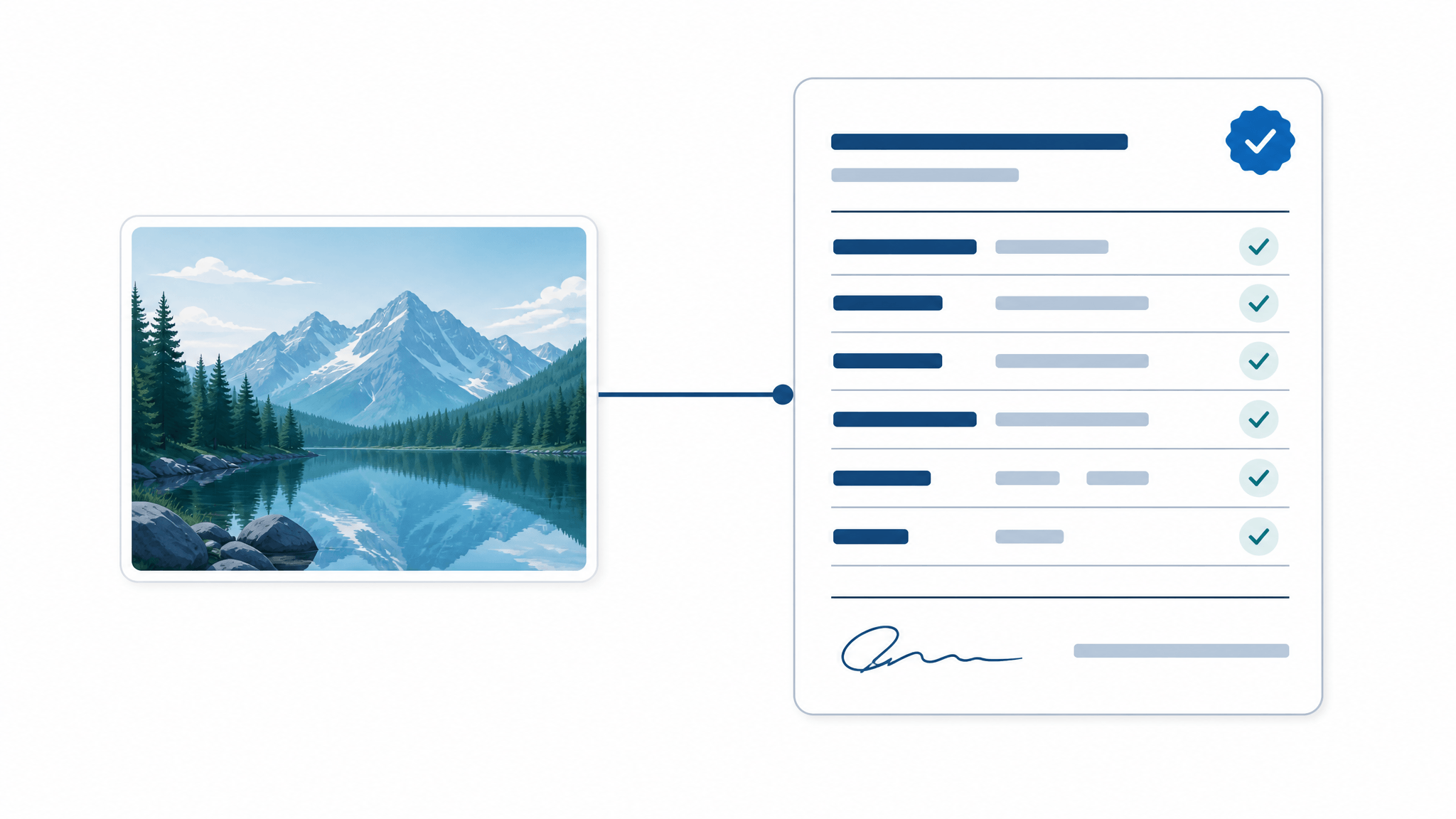
Content credentials (C2PA). Metadata attached to the file, following the open C2PA standard from the Coalition for Content Provenance and Authenticity. C2PA describes Content Credentials as working "like a nutrition label for digital content" — a signed record of where the content came from and what edits it went through, available to anyone who reads the file. It answers the question "what is the provenance of this image, and has it been tampered with?"
| Layer | What it is | Visible to humans? | Survives edits? | Example |
|---|---|---|---|---|
| Visible watermark | Badge overlaid on the image | Yes | No — easy to crop | Google's "sparkle" badge (Nano Banana, Omni) |
| Invisible watermark | Signal embedded in pixels | No | Mostly — designed to survive cropping, filters, compression | SynthID |
| Content credentials (C2PA) | Signed metadata attached to the file | No | Only if the file keeps its metadata | Credentials embedded by Google, Adobe, OpenAI, Anthropic |
The three layers are complementary, not interchangeable: the visible badge is a human cue, the invisible watermark is a durable model fingerprint, and C2PA is a structured provenance record.
Google's August 2026 change: visible watermark off, SynthID and C2PA stay
In mid-August 2026, Google announced that users can turn the visible watermark off. A new "Media watermark" setting in Gemini and in Google's AI video generator, Flow, removes the sparkle badge from content generated with the Nano Banana and Omni models. Google plans to roll the setting out to Search as well, and says the toggle will not launch in countries that require visible watermarks.
The important part is what doesn't change. According to Josh Woodward, Google's VP of Google Labs, Gemini, and AI Studio, AI-generated content still has invisible SynthID watermarks and C2PA metadata embedded even when the visible badge is off. You can still verify a piece of content by asking Gemini or Search whether it is AI-generated.
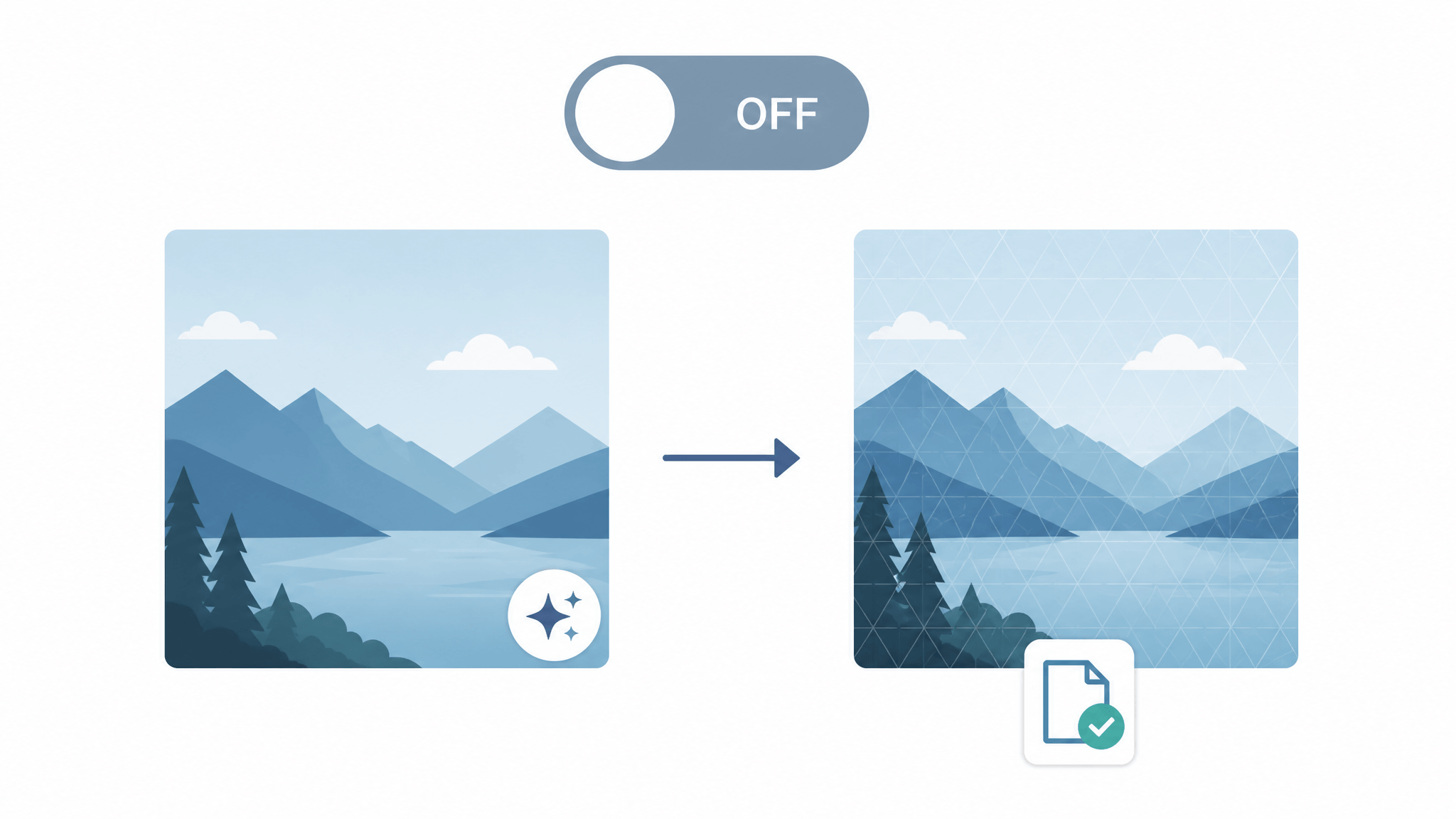
In context, Google's move brings Gemini in line with the rest of the industry. OpenAI and Meta don't apply visible watermarks to most AI images either — OpenAI signals AI origin with metadata such as C2PA, and Meta has its own Content Seal standard. The practical consequence is that "I don't see a watermark" is no longer a meaningful human-visual check; knowing an image's origin now requires a tool.
Why "no visible watermark" doesn't mean "undetectable"
Once the visible badge is gone, three things are still true about a Gemini-generated image:
- SynthID is still there. The invisible watermark was embedded at creation and is designed to survive resizing, filters, and compression. Google's detector (via Gemini, or the SynthID Detector portal) can still confirm whether content was created or edited by Google AI.
- C2PA metadata is still there. The file carries a machine-readable provenance record, signed so tampering is detectable.
- Verification still works. You don't need to trust the image — you check it. Ask Gemini, use the SynthID Detector, or inspect the C2PA credentials with any conformant validator.
For video and music the same principle applies, but this article focuses on images, where the ecosystem is moving fastest.
The ecosystem is moving toward detection as the default
Two announcements in the same week show where AI-image provenance is heading.
Google open-sourced Credentio (August 13, 2026). Credentio is a C++ library for working with C2PA Content Credentials, supporting specification versions 2.2 and 2.4. It is the same code that has powered nearly 40 conformant C2PA-enabled Google products and scaled to tens of billions of generated assets. Credentio validates credentials locally — no cloud upload — with a small memory footprint that handles files up to multiple gigabytes. It supports configurable trust lists and deeply parses manifests, signatures, and claim structures. Google says it plans to expand Credentio beyond validation to generate and embed Content Credentials directly into media files.
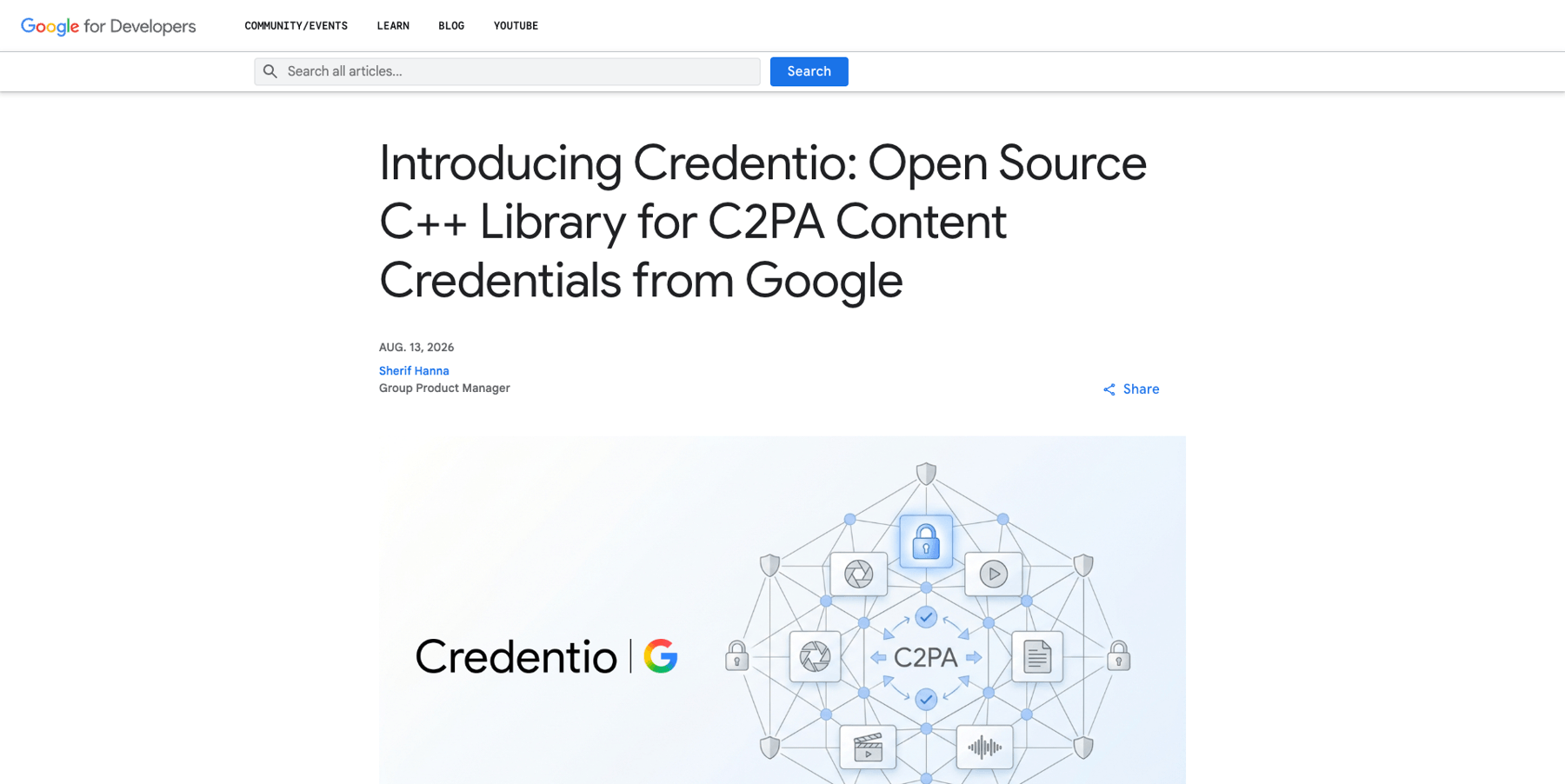
Source: Google Developers Blog, "Introducing Credentio: Open Source C++ Library for C2PA Content Credentials from Google" (August 13, 2026)
For image users, the practical effect is that fast, local C2PA verification is becoming a commodity building block: apps can now check provenance without sending your files to a server.
Anthropic is watermarking Claude (announced August 11, 2026). Anthropic signed the EU AI Act's Article 50(2) Code of Practice on Transparency of AI-Generated Content. Under that commitment, Claude-generated text will carry an embedded, imperceptible watermark, and supported generated files (.svg, .png, .jpg) will get signed provenance metadata following the C2PA standard. The marks apply globally — across Claude Platform (API), Claude, Claude Code, Claude Cowork, and Claude Tag — with new models marking content from day one and support for existing models in progress. The EU AI Act transparency obligations came into effect on August 2, 2026, with a four-month grace period for products launched before that date.
Anthropic is explicit about the limits: a detected mark is a signal that content may have been processed by Claude, not conclusive proof, and the absence of a mark doesn't prove human origin — heavy editing, paraphrasing, translation, very short text, or stripped metadata can hide marks. That honesty is the right frame for every watermarking system, including SynthID and C2PA. (Anthropic documents these limitations on its Claude marking support page.)
A practical checklist for AI image users
Whatever tools you use to generate or publish images, treat provenance checking as a normal step:
- Know what your tool embeds. Check the provider's documentation: visible watermark, invisible watermark, C2PA metadata, or none? Different providers ship different combinations.
- Verify before you rely on a "clean" image. If an image matters — for reporting, licensing, compliance, or authenticity — check it: ask Gemini or Google Search whether it's AI-generated, run the SynthID Detector, or inspect C2PA credentials with a conformant validator. Developers can use Google's open-source Credentio for local, high-throughput C2PA validation.
- Don't equate "no visible watermark" with "undetectable" or "human-made." After August 2026 this equation is wrong for Google's models, and it was already wrong for OpenAI's and Meta's. A clean-looking image can still carry invisible and metadata marks.
- Disclose when it matters. The EU AI Act's transparency obligations took effect in August 2026, and if you distribute AI content commercially, check the rules that apply to your use case. When in doubt, disclose.
- Keep honest limits in mind. Watermarks are signals, not proof. Editing, re-encoding, screenshots, and dedicated stripping tools can remove or damage marks — and no marking system catches everything. Treat provenance tools as evidence, not certainty.
FAQ
Can you remove an invisible AI watermark? Not reliably. SynthID is designed to survive cropping, filters, and compression, and C2PA metadata is signed to make tampering detectable. Aggressive editing or re-encoding can degrade or strip marks, which is exactly why providers treat marks as signals rather than guarantees.
Is it illegal to remove an AI watermark? That depends on where you are and what you do with the image — the EU AI Act's labeling obligations took effect in August 2026, and different platforms and jurisdictions take different approaches. Removing marks to misrepresent origin is generally the risky part, not the technical act itself.
How do I check if an image is AI-generated? For Google models, ask Gemini or use the SynthID Detector. For C2PA-signed files, inspect the content credentials with any conformant validator; Google's open-source Credentio is one option for developers.
Does Gemini still watermark images? Yes — the visible badge is now optional, but SynthID watermarks and C2PA metadata remain embedded in content generated with Nano Banana and Omni models.
Conclusion
Google's August 2026 change removes the layer humans could see, not the layers machines can read. The visible watermark was always the weakest of the three; the durable story of AI-image provenance is the invisible watermark plus C2PA content credentials, with local verification tooling like Credentio and compliance-driven marking from Anthropic and the EU AI Act pushing detection toward the default. For anyone who makes, publishes, or consumes AI images, the useful habit is simple: don't judge an image by what you can see — check what it carries.
Transform Your Images with AI
Turn sketches into stunning images, remove backgrounds, swap faces, and more — all powered by AI.
Try Sketch To FreeShare
SketchTo Team
Tech writer covering AI tools, image processing, and creative workflows.
Related Articles
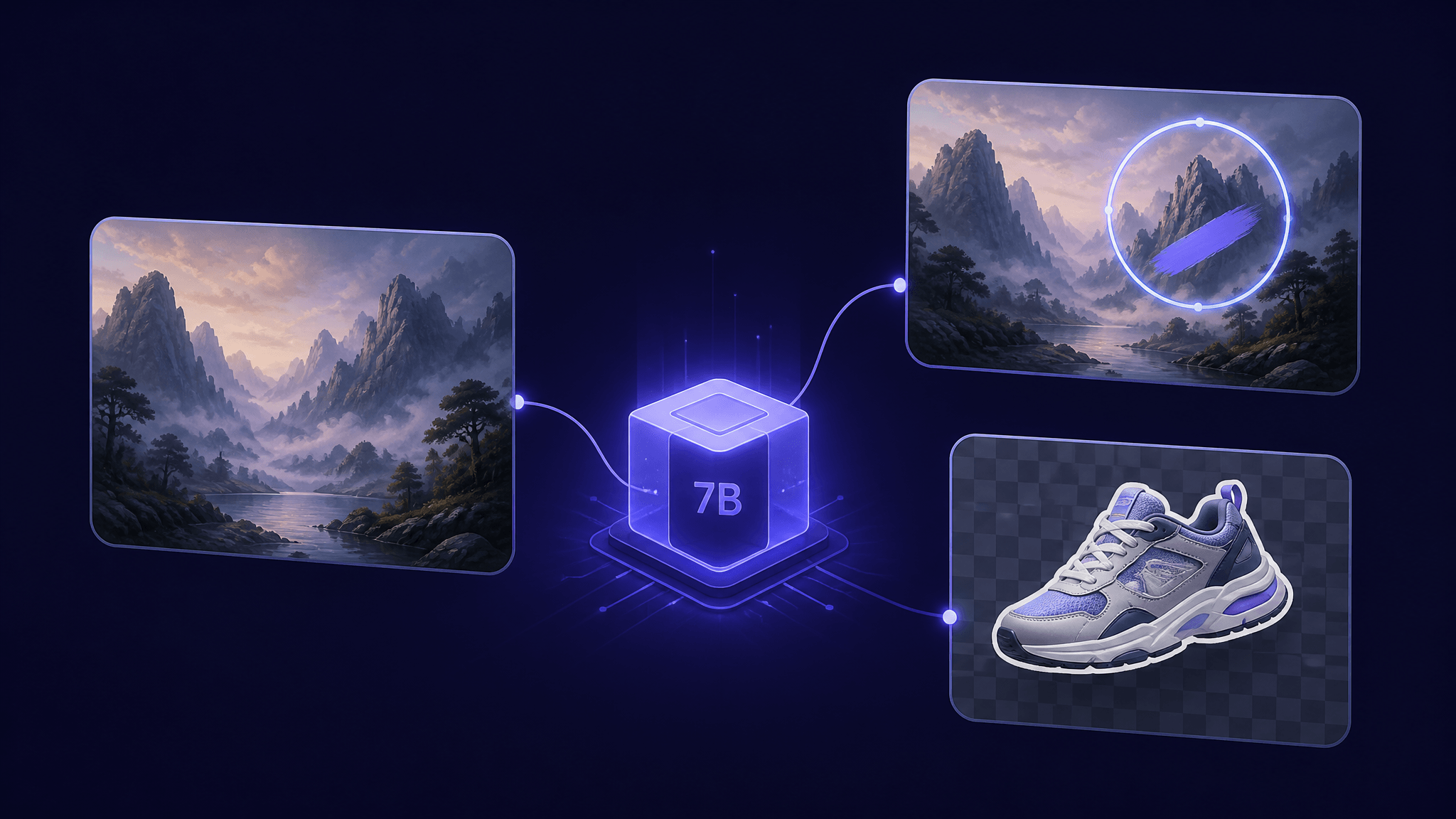
Qwen-Image-2.1: One 7B Open-Weight Model for Image Generation, Editing, and Transparent Assets
Qwen-Image-2.1 unifies text-to-image, editing, and native RGBA transparency in one 7B open-weight model. What it does, what's new, how to run it today — and the license limits before you adopt it.
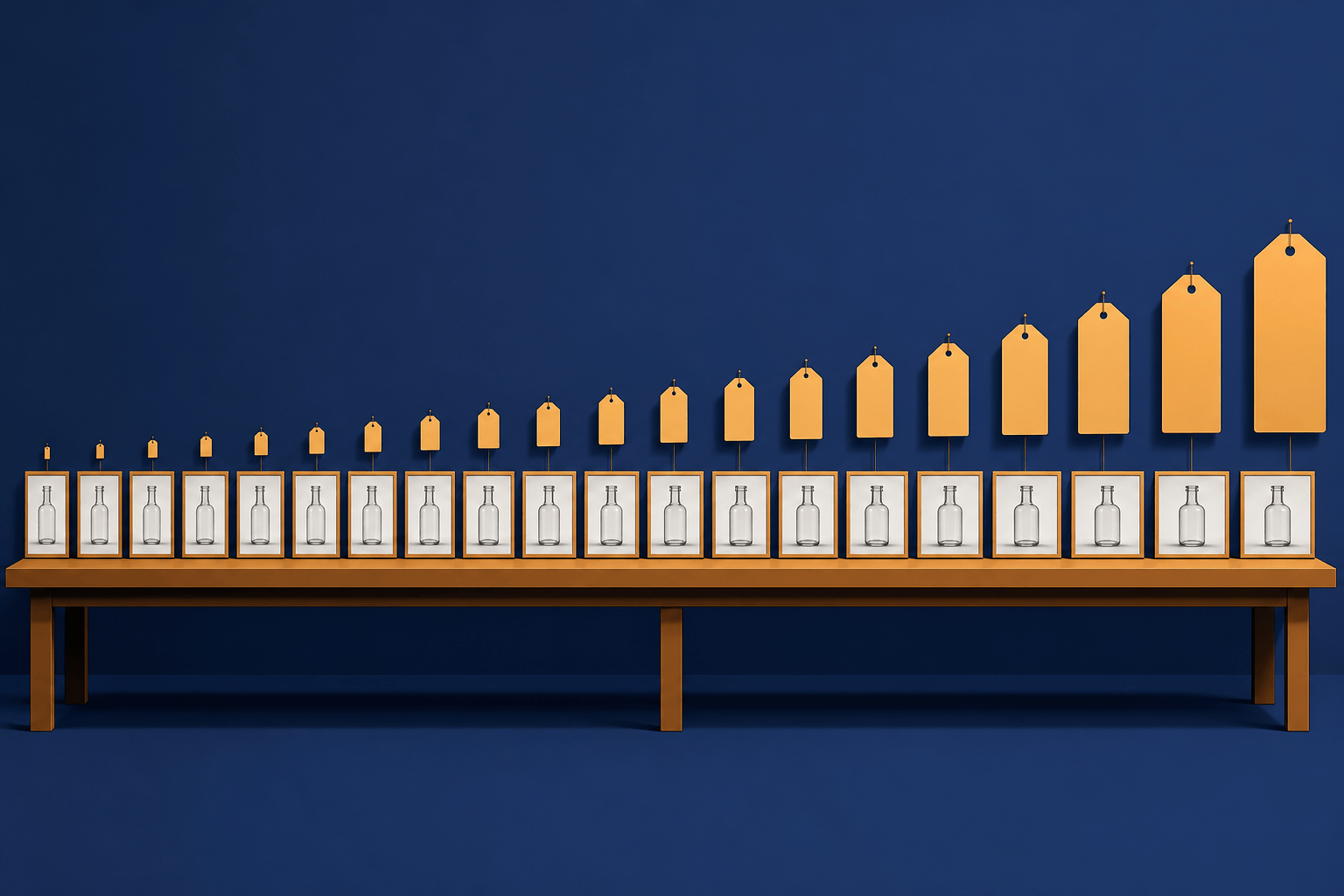
AI Image Generation Cost Comparison: What 20 Models Actually Billed
OpenRouter ran one prompt through 20 image models and recorded every bill — $0.006 to $0.134 for the same 1:1 image. The real per-image costs, and how to pick a model your budget agrees with.

GPT-6 Astra Use Cases for Image and Design Work: What's Real So Far
A source-attributed catalog of GPT-6 Astra's real image and design use cases — 3D worlds, frontend design, media production — plus the honest gap and what it means for your tools.